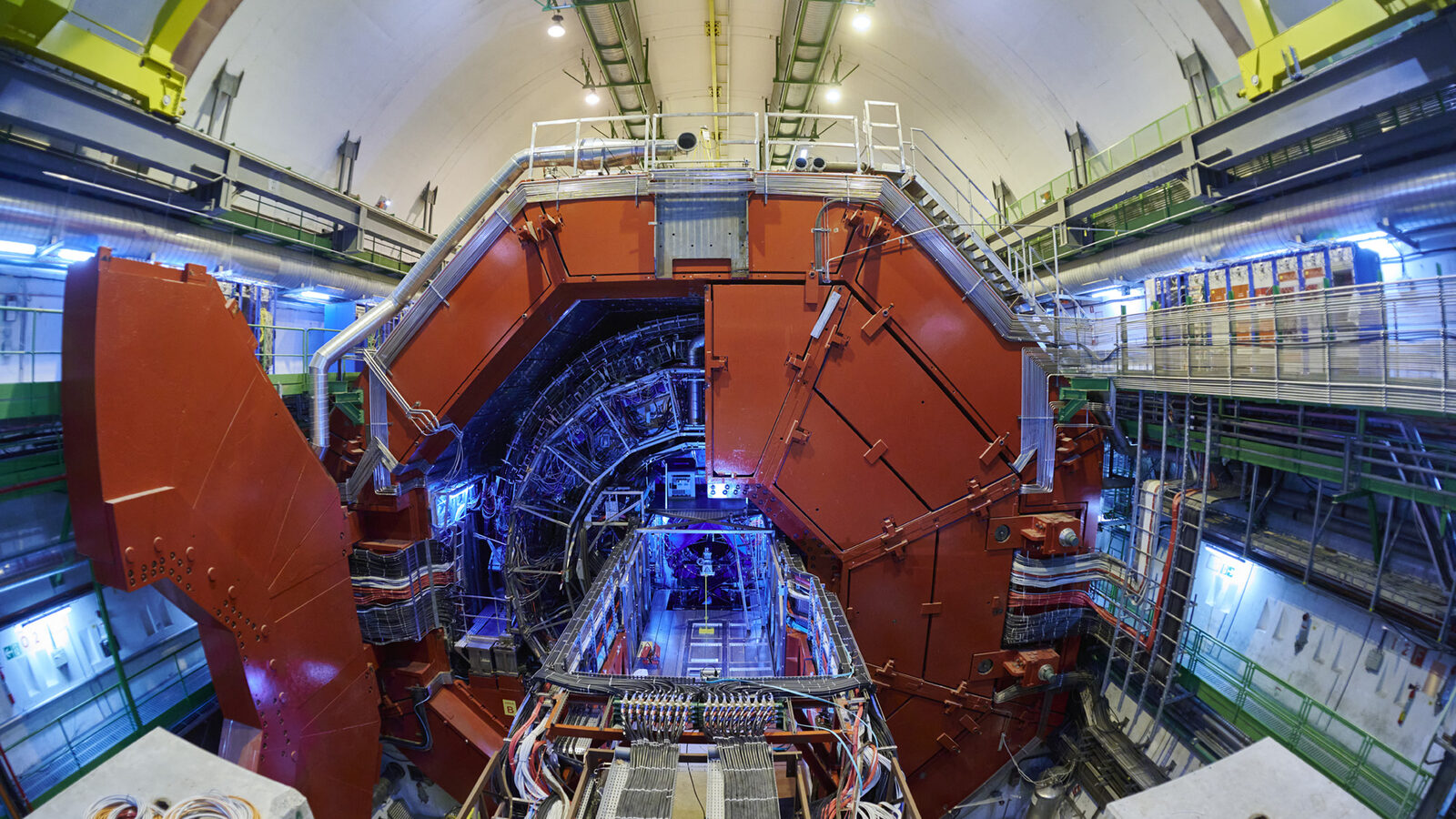
In 2023, the ALICE experiment was ready for their best year yet, until a mysterious signal threatened everything. As the LHC wraps up its 2025 lead-ion run, physicists recall how they worked together to solve the puzzle.
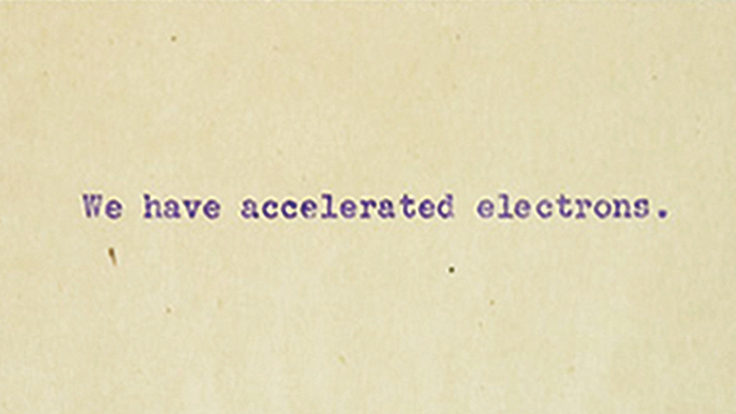
On April 28, 1947 Stanford Linear Electron Accelerator Project Report No. 7 announced the realization of a dream 15 years in the making: the linear acceleration of electrons.
Canning, pickling, drying, freezing -- physicists wish there were an easy way to preserve their hard-won data so future generations of scientists, armed with more powerful tools, can take advantage of it. They've launched an international search for solutions.
Every so often, particle physics communicators from labs around the world gather to swap strategies for getting people interested in science. At the group's April meeting in Japan, the big hit was toilet paper.
Chugging along in the background, old physics machines are the workhorses behind many cutting-edge projects, from the world's most powerful X-ray laser to the Large Hadron Collider and a lab that tests microchips bound for Mars.
How do you make the invisible visible? Astrophysicists face this challenge daily. Unlike astronomers who view stars through telescopes, astrophysicists study cosmic particles that are too small or dark to see directly.
What opera and physics may have in common, more than anything else, is their tendency to make most people cringe or fall asleep. Can an avant-garde opera that compares self-exploration to the physics of multiple dimensions invigorate audiences?
Some of Fermilab's mechanical technicians spend a lot of time underground. In the echoing tunnels of the Tevatron collider they fix things, crawling behind equipment to replace aging nuts and bolts and repair everything from vacuum pumps to multi-ton superconducting magnets.
For a growing number of so-called Nerdcore rappers, the message is that people need to support basic research and math and science education if they want to hand future generations a nation worth bragging about.