We’ve paired off eight elite kinds of magnets to battle for the win. Learn about each of the magnets then vote for your favorites in our Twitter polls (in thread).
Three progressively heavier copies of each type of matter particle exist, and no one knows why. A new paper by Steven Weinberg takes a stab at explaining the pattern.
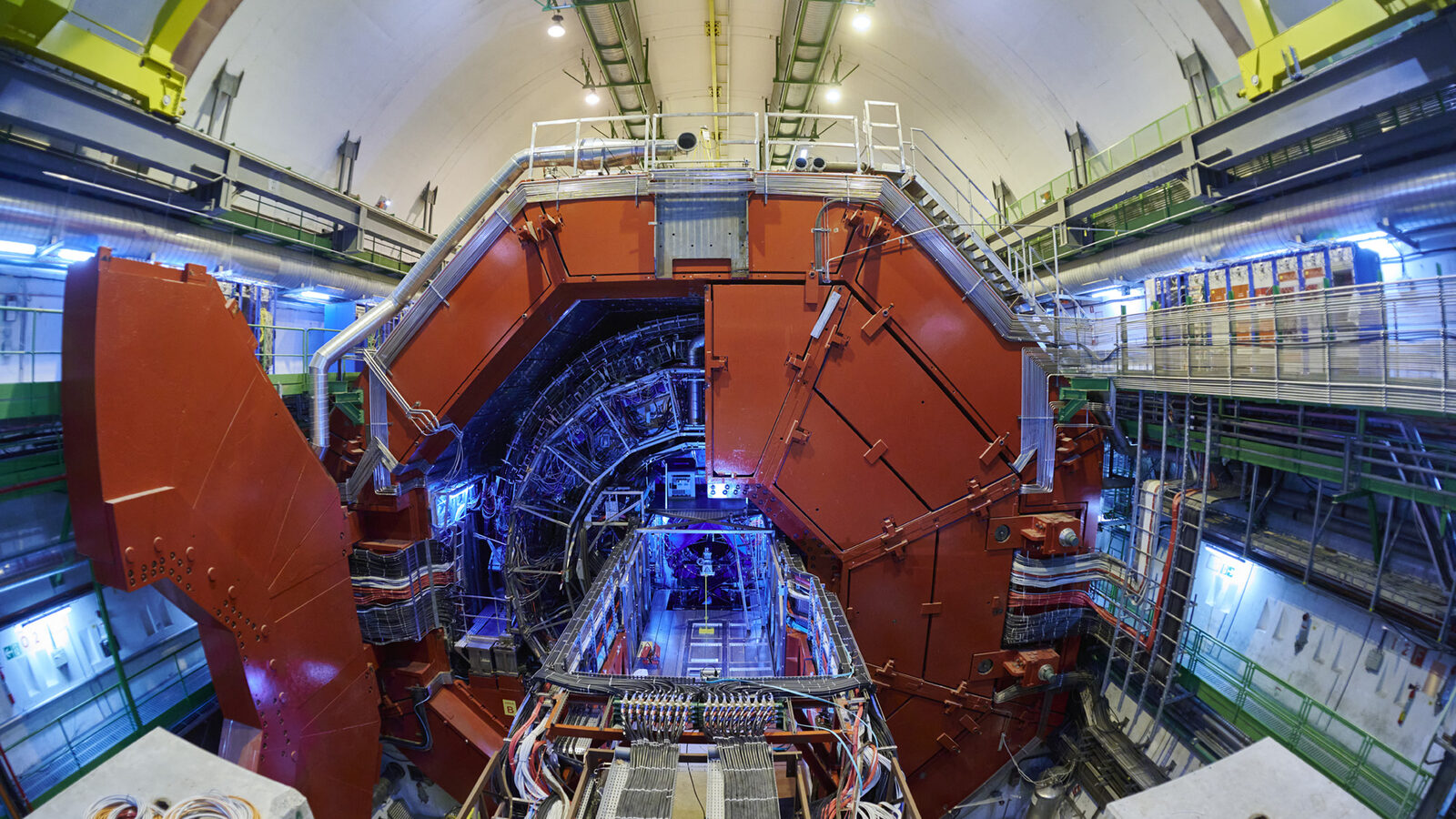
In 2023, the ALICE experiment was ready for their best year yet, until a mysterious signal threatened everything. As the LHC wraps up its 2025 lead-ion run, physicists recall how they worked together to solve the puzzle.
Many a promising innovation dies on its way from the research lab to the commercial market. But with help from government or industry, the survival odds increase.
The Large Synoptic Survey Telescope, which will plumb a bigger volume of the universe than any survey before it, isn't just a challenge for astronomers. It also requires the expertise of high-energy physicists, who play key roles in advancing the flourishing field of survey astronomy.
Fermilab scientists are using what look like dime-store toys to polish specialized accelerator cavities, each of which costs about as much as a brandnew Maserati.
As physics lab environments go, one could do worse than sharing the expanse of the Atlantic Ocean or the animal-dotted ice shelves of Antarctica with 20 pancake-cooking, dart-playing Swedish sailors.
On Mount Aragats, the highest point in the Armenian landscape, atop a volcano ribboned with glaciers, lava-born fissures, and medieval fortifications, an early 20th century observatory is leading Armenian physics in new, 21st century directions.
Every summer weekend, several dozen CERN physicists gather to enjoy a beloved American tradition: They play for the Quarks and the Leptons in an international softball league.
It was my first morning in Tokyo. Carrying a camera, an offering of saké, and a note in Japanese that I hoped explained why I was there, I stepped into the sumo training hall to watch the days practice.