Recent measurements of particles called B mesons deviate from predictions. Alone, each oddity looks like a fluke, but their collective drift is more suggestive.
The difficult-to-detect neutrino seems to undergo a strange identity-flipping process, and if this reaction occurs differently between neutrinos and antineutrinos, then it could help physicists explain why matter dominates over antimatter.
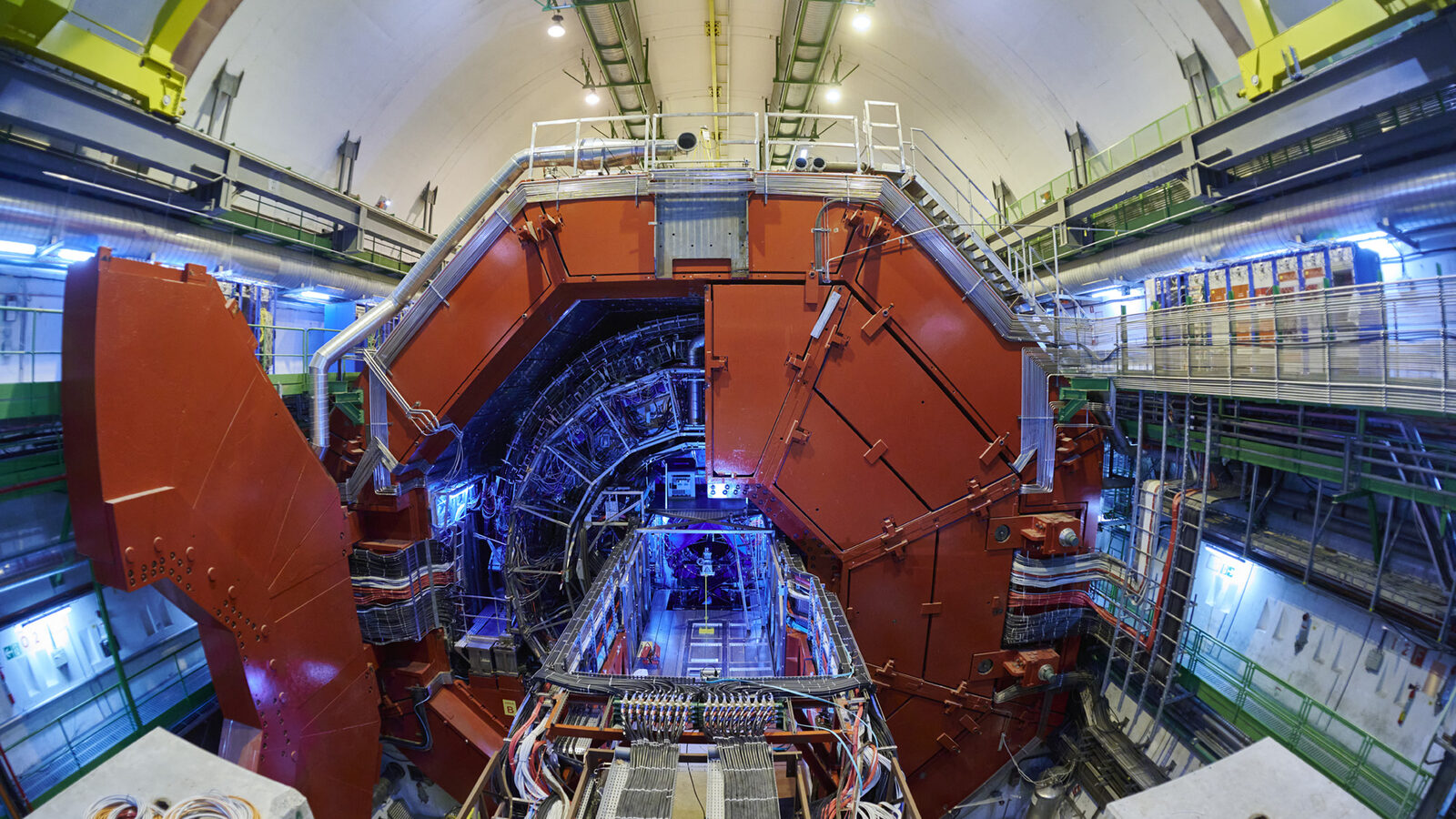
In 2023, the ALICE experiment was ready for their best year yet, until a mysterious signal threatened everything. As the LHC wraps up its 2025 lead-ion run, physicists recall how they worked together to solve the puzzle.
How the public release of data from the Fermi Gamma-ray Space Telescope’s main instrument has affected the hundreds of researchers who use it—and resulted in more and better science.
Recently members of a group playing an online game called Foldit were able to solve a 15-year-old problem—determining the complex structure of an HIV protein—in just two weeks. This was made possible through citizen cyberscience.
Would you walk 10,000 steps for a piece of glass the size of a deck of cards? What if that piece of glass were part of an astrophysics experiment to warn people about potentially deadly asteroids zooming toward Earth and make a 3D map of the universe?