Spurred on by quantum experiments that scramble the ordering of causes and their effects, some physicists are figuring out how to abandon causality altogether.
Evidence of a rare neutrino-interaction process called the Glashow resonance has been observed by a detector buried deep in the Antarctic ice—opening up a way to probe neutrino formation in astrophysical sources.
The TOTEM collaboration at the LHC, in collaboration with the DZero collaboration at the former Tevatron collider at Fermilab, have announced the discovery of an elusive three-gluon state predicted almost 50 years ago.
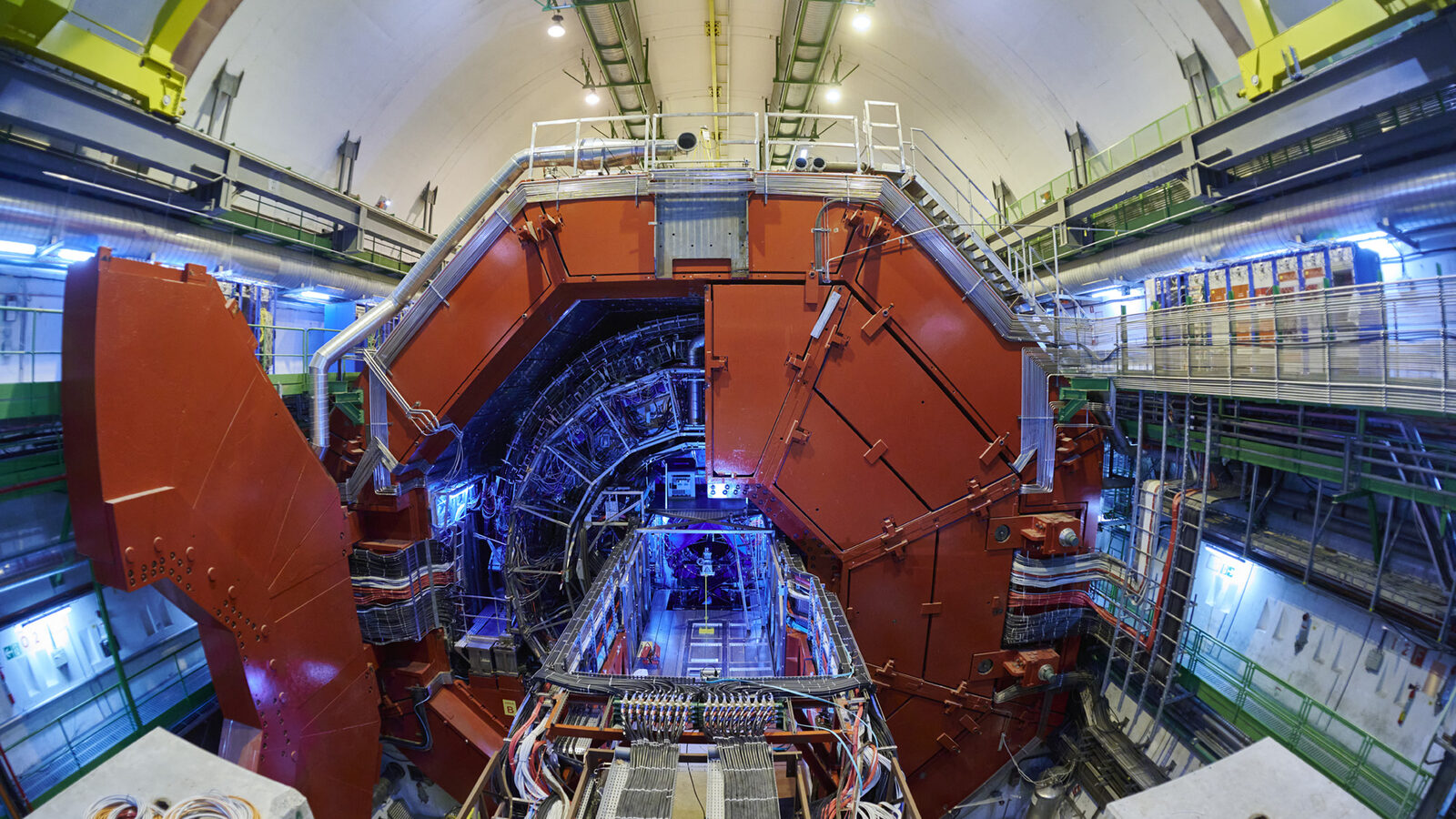
In 2023, the ALICE experiment was ready for their best year yet, until a mysterious signal threatened everything. As the LHC wraps up its 2025 lead-ion run, physicists recall how they worked together to solve the puzzle.
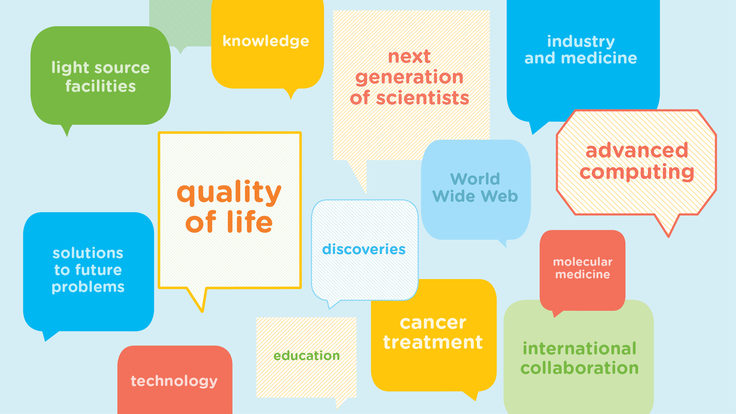
Particle physics has revolutionized the way we look at the universe. Along the way, it’s made significant impacts on other fields of science, improved daily life for people around the world and trained a new generation of scientists and computing professionals.
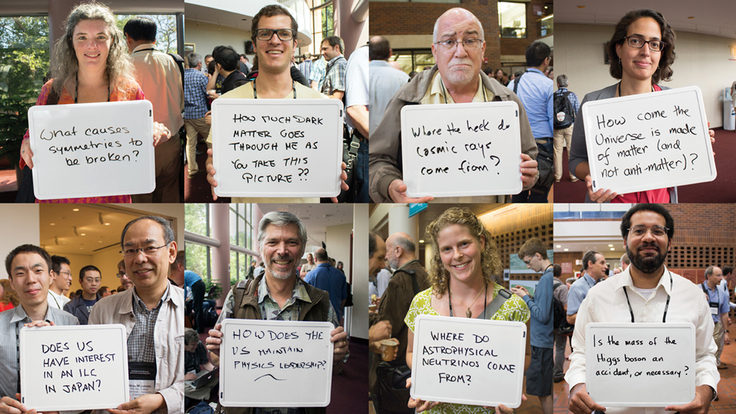
Do you think scientists have the answers to all the questions? As these researchers admit, there’s still so much to discover. Particle physics is brimming with mysteries and unknowns.
Do you think scientists have the answers to all the questions? As these researchers admit, there’s still so much to discover. Particle physics is brimming with mysteries and unknowns.
Information gained through a CERN experiment that combines particle physics and atmospheric chemistry will help scientists create better climate models.
The search for the Higgs at experiments at the Large Hadron Collider was an international effort involving thousands of people, with physicists and engineers from US institutions playing a significant role throughout.