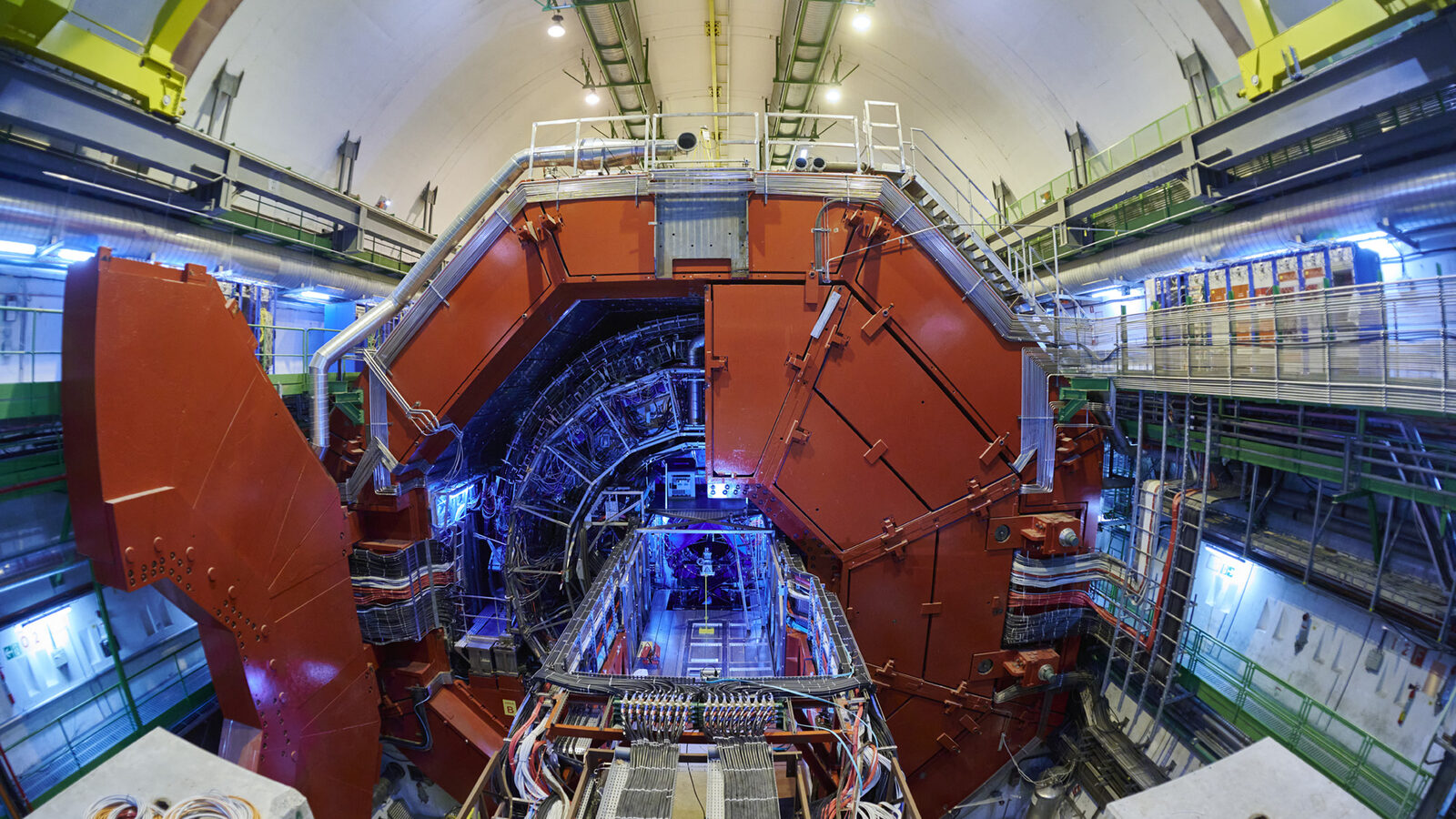
In late October SuperCDMS scientists cooled their dilution refrigerator down to 5.3 millikelvin, only a few thousandths of a kelvin above absolute zero.
Astrophysicist Risa Wechsler explores why dark matter may be the key to understanding how the universe formed, and shares how physicists in labs around the world are coming up with creative ways to study it.
In 2023, the ALICE experiment was ready for their best year yet, until a mysterious signal threatened everything. As the LHC wraps up its 2025 lead-ion run, physicists recall how they worked together to solve the puzzle.
How do you make the invisible visible? Astrophysicists face this challenge daily. Unlike astronomers who view stars through telescopes, astrophysicists study cosmic particles that are too small or dark to see directly.
Chugging along in the background, old physics machines are the workhorses behind many cutting-edge projects, from the world's most powerful X-ray laser to the Large Hadron Collider and a lab that tests microchips bound for Mars.
Some of Fermilab's mechanical technicians spend a lot of time underground. In the echoing tunnels of the Tevatron collider they fix things, crawling behind equipment to replace aging nuts and bolts and repair everything from vacuum pumps to multi-ton superconducting magnets.
A long time ago in a national laboratory far, far away some physicists looked around their workplace and thought of dark forces. Not dark matter; not dark energy; but the ultimate force from the dark side: Darth Vader.
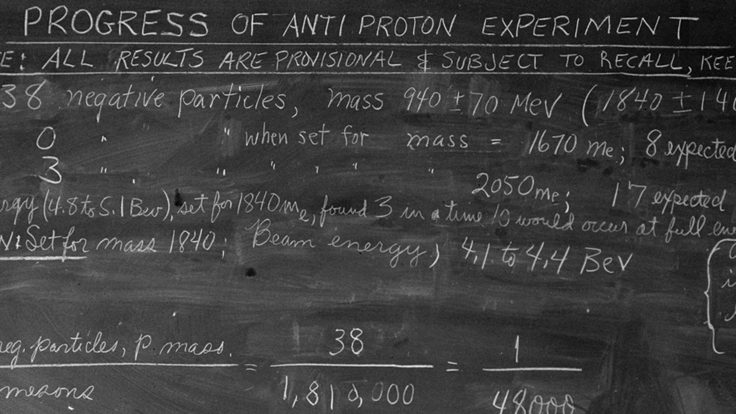
When the Bevatron switched on at Lawrence Berkeley National Laboratory in the fall of 1954, it was the largest particle accelerator ever built, capable of producing energies upwards of six billion electronvolts.
Worried about getting the experimental data they need to finish their PhDs, about two dozen graduate students have left the long-delayed Large Hadron Collider for experiments at the Fermilab Tevatron. Most of them say they won't be gone for long.
She could take her pick of extreme adventures—rock climbing, skydiving, trekking through some exotic wilderness. The Swiss TV show Sportpanorama gave Dominique Gisin, winner of two International Ski Federation World Cup downhill victories in 2009, the chance to do anything she'd like.