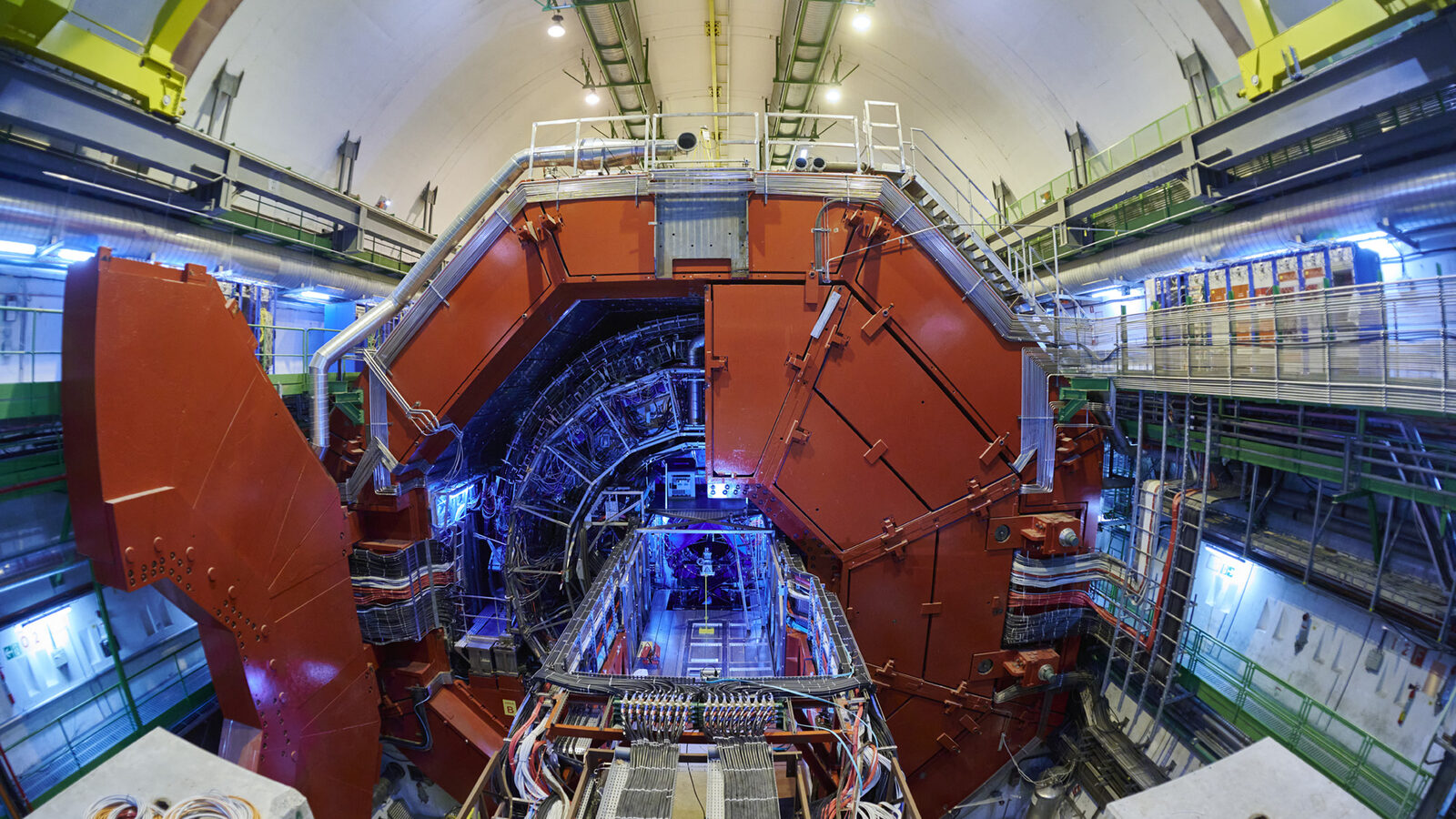
In 2023, the ALICE experiment was ready for their best year yet, until a mysterious signal threatened everything. As the LHC wraps up its 2025 lead-ion run, physicists recall how they worked together to solve the puzzle.
Quick, give an example of a first name of a physicist. Albert? Benjamin? Sure, Albert Einstein and Benjamin Franklin are famous examples. But their first names are rather unusual.
A surgeon and a scratch golfer most of his adult life, a US Army officer in World War II, the doctor gave up his medical practice in his 60s while exhibiting increasingly erratic behavior–such as meandering down to a favorite car dealer in his prosperous New Jersey town, and signing the pap
Sometimes it takes the most impressive equipment in the world to find the smallest, most easily overlooked particles in the universe. Fermilab's Neutrinos at the Main Injector (NuMI) project is a perfect example.
The Stanford Linear Accelerator pumps large amounts of energy into beams of electrons and positrons, sending them into the PEP-II storage ring where the particles can collide, revealing the secrets of fundamental particle processes.
During a recent trip to CERN on the Franco-Swiss border, my fellow International Linear Collider communicators and I gathered in the cafeteria for tea and coffee.
Roger Erickson was annoyed with all the calls to the main control room. People were eager for news of the Stanford Linear Collider (SLC). Was it running? Did they already observe the first Z particle, one of the carriers of the weak force?