Scientists on the Axion Dark Matter Experiment have demonstrated technology that could lead to the discovery of theoretical light dark matter particles called axions.
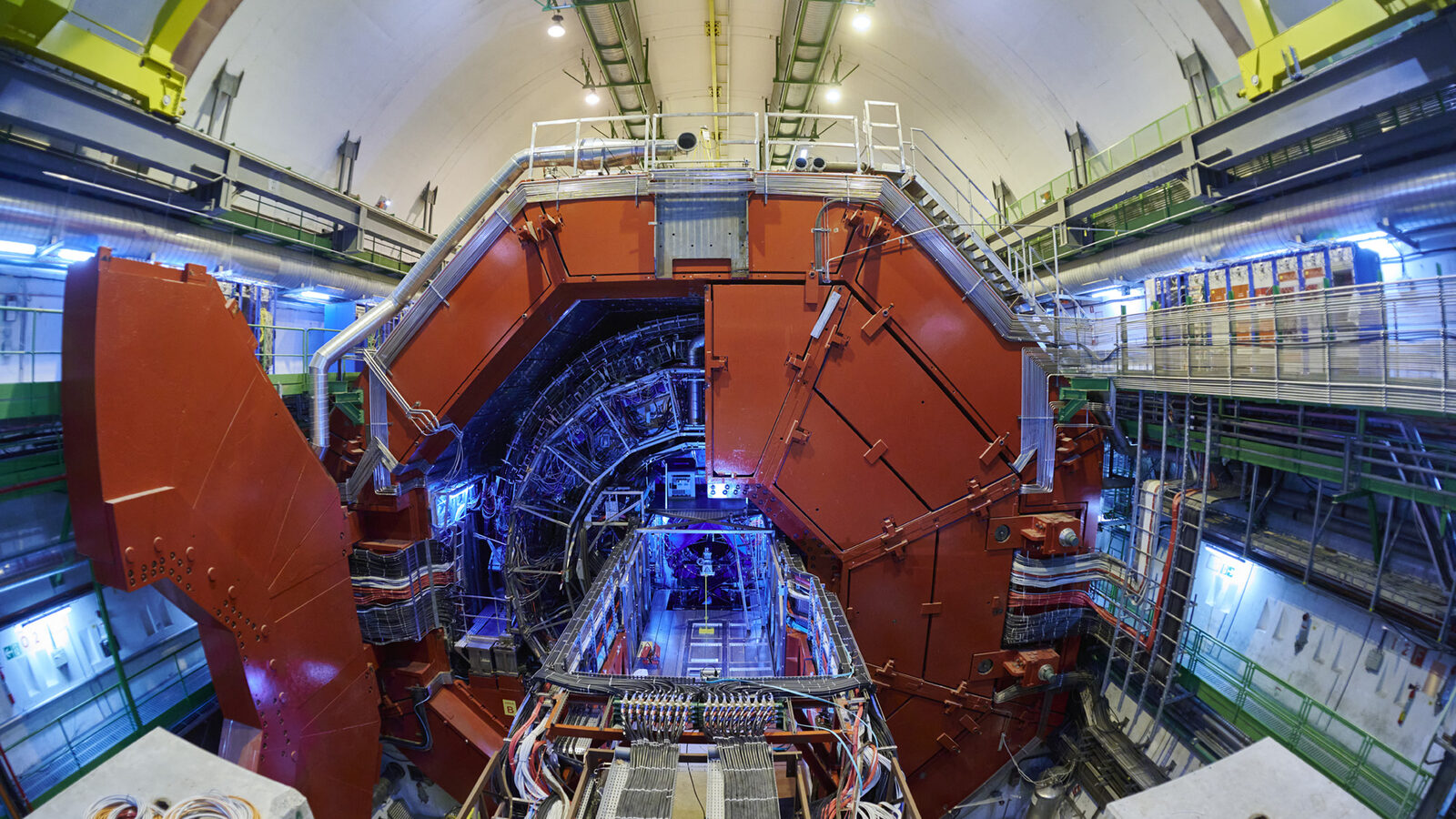
In 2023, the ALICE experiment was ready for their best year yet, until a mysterious signal threatened everything. As the LHC wraps up its 2025 lead-ion run, physicists recall how they worked together to solve the puzzle.
Few facets of nature are more mysterious than the quantum world. Particles that appear and disappear from nothing, interactions governed by probability, and intrinsic uncertainties are enough to baffle even the most experienced scientist.
The amazing properties of spider webs have fascinated scientists for years. Some of the mysteries of the spider's thread (such as the radii and spirals of threads produced by the Nephila pilips spider shown above) are unraveling through the use of synchrotron light sources.
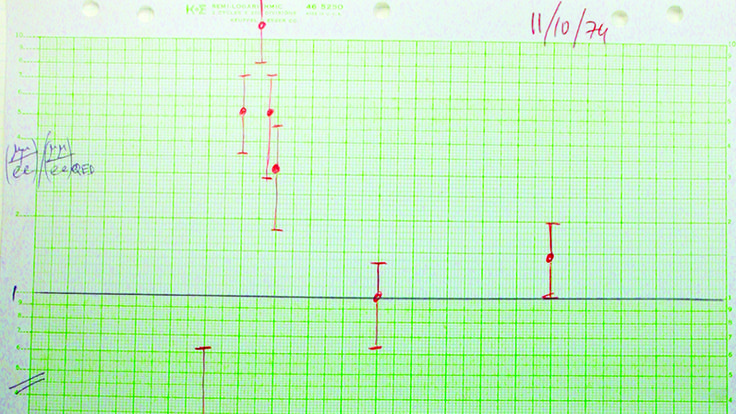
Burton Richter’s group double-checked what they thought was a minor statistical inconsistency in their data. Using the Stanford Positron Electron Accelerating Ring (SPEAR), they probed electron-positron collision energies around 3.1 GeV.
Only detectors with the greatest precision capabilities will measure up to the machine seeking to explore supersymmetry, dark matter, the Higgs mechanism, and new physics that hasn't yet been imagined.
The SLAC archives, in the windowless basement of the Central Laboratory Annex, are no greenhouse. Yet for the past few years, a small tree has adorned the den of SLAC's archivist Jean Deken.
Michael Salamon brings an outward vision to Office of Science and Technology Policy. He says Walt Whitman got it wrong: the more one learns about nature, the more beautiful it becomes.