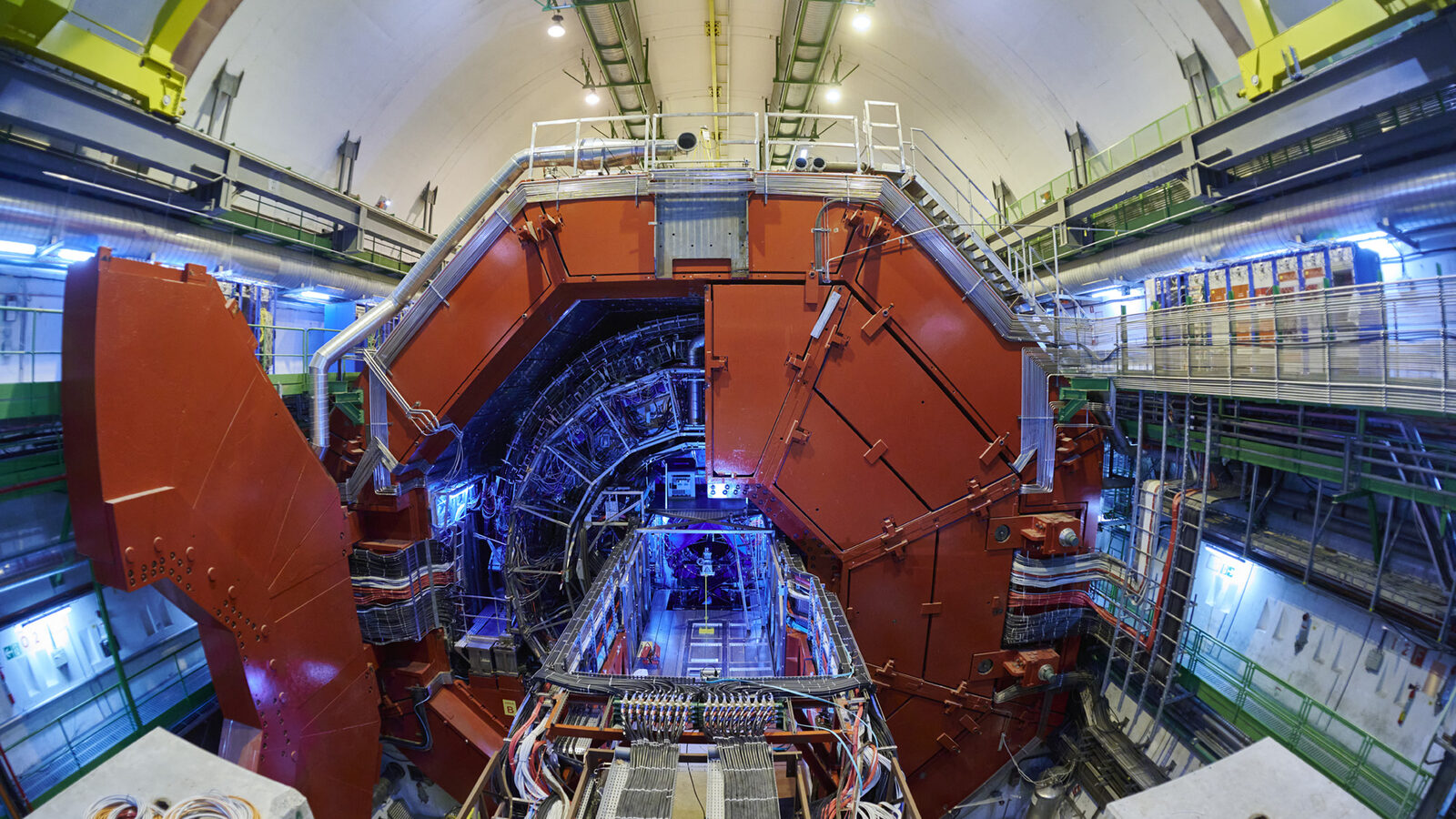
In 2023, the ALICE experiment was ready for their best year yet, until a mysterious signal threatened everything. As the LHC wraps up its 2025 lead-ion run, physicists recall how they worked together to solve the puzzle.
This August, one hundred and fifty postdocs and advanced graduate students from around the world will gather on the Illinois prairie to enhance their understanding of particle colliders at the CERN-Fermilab Hadron Collider Physics Summer School.
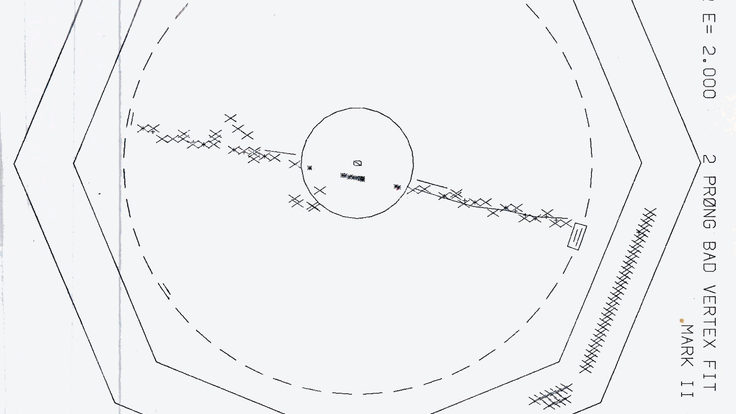
The Positron Electron Project (PEP) collider at the Stanford Linear Accelerator Center produced its first collisions in 1979. All sorts of particles burst out, including the tau lepton, an ephemeral cousin of the electron.
Along the Loop Road at Stanford Linear Accelerator Center, the roar of falling water and a refreshing mist filled the air after six solid weeks of California rain. But the water cascading down the inside of Campus Cooling Tower 101, and landing in a frothy pool, is hardly scenic.
Over a half-eaten burrito or a bowl of spaghetti, Sam Ehrenstein ponders the unanswered questions of fundamental physics. Yet Sam is no experimental physicist or postdoc brooding over his data. Not yet, anyway.
After undergoing a buffered chemical polishing (BCP) treatment at Cornell University, the first US-processed and tested International Linear Collider superconducting cavity achieved a milestone accelerating gradient of 26 MV/m (megavolts per meter)–surpassing the first gradient goal (25 MV/m).