New studies of the oldest light and sound in the cosmos suggest novel physics—rather than systematic errors—could explain an unsolved scientific mystery.
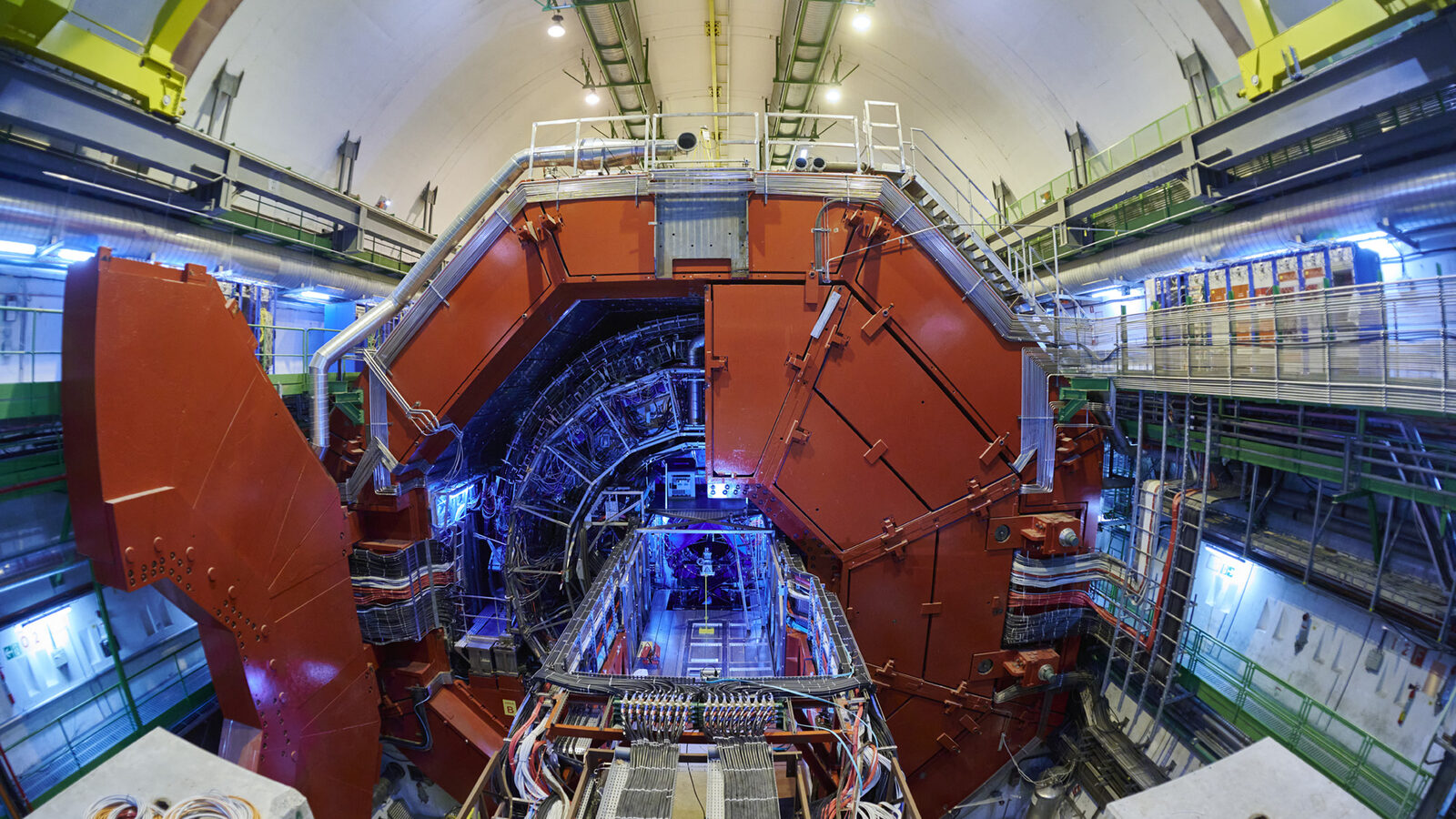
In 2023, the ALICE experiment was ready for their best year yet, until a mysterious signal threatened everything. As the LHC wraps up its 2025 lead-ion run, physicists recall how they worked together to solve the puzzle.
Even in the company of a two-story nose-picking machine, human cupcakes, battling robots, and power-tool drag races, the giant Tesla coil stands out. Maybe it's the loud buzz and crackle of artificial lightning bolts, writhing like fiery serpents from the top of the thing.
In August 2006, after almost a year of preparation, we packed up all our belongings to move from Batavia, Illinois, to Geneva, Switzerland. We were following our particle physics careers from Fermilab to CERN, the European particle physics lab.
Lead bricks and radiation gloves normally indicate a need to protect lab workers from radioactivity. For a laboratory at the University of Alabama in Tuscaloosa, however, the opposite is true.
What is this stuff that fills the vacuum of space, accelerates the expansion of the universe, and accounts for 70 percent of everything? More than two dozen experiments aim to find out.
Just inside the site boundary, secluded from most of Fermilab, sits Leonard Baumann's rickety red barn. Baumann, like 55 other farmers, relocated 40 years ago to make way for the construction of Fermilab.
Inside, the auditorium at the National Museum of Natural History in Washington, DC, was packed and humming in anticipation. Outside, a man waved a sign at stragglers hurrying for the door: "Need One Ticket for String Theory Debate."
Scientists have sought to create better medical imaging techniques ever since Wilhelm Röntgens 1896 discovery that X-rays can reveal bones and other anatomical structures in a noninvasive way.