latest news

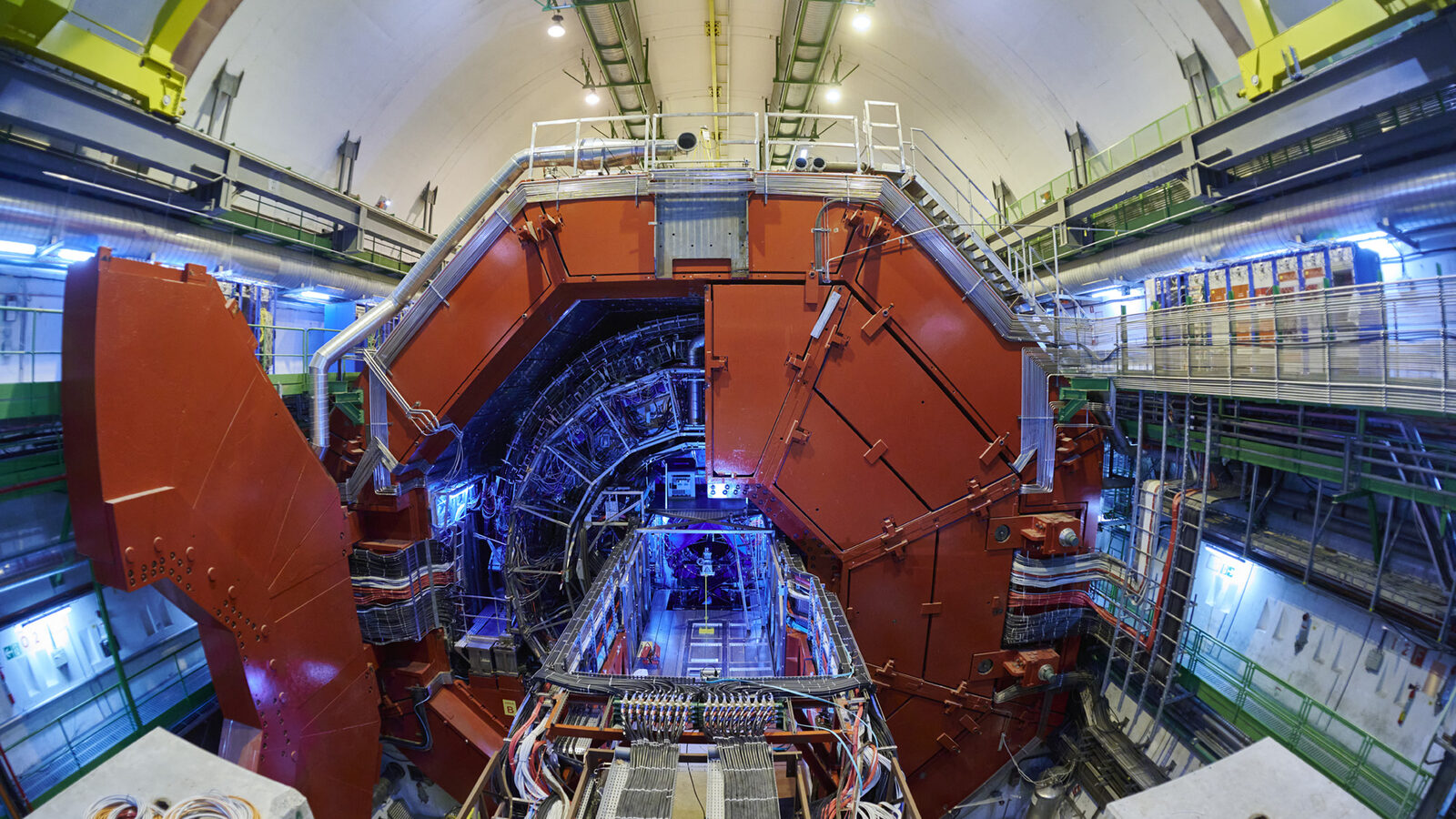
Curiouser and curiouser: a riddle at the ALICE detector

12/09/25

In 2023, the ALICE experiment was ready for their best year yet, until a mysterious signal threatened everything. As the LHC wraps up its 2025 lead-ion run, physicists recall how they worked together to solve the puzzle.

02/01/06

On the trails of Indiana Jones

Innovative 21st century technology at Argonne National Laboratory is taking researchers back to the 19th century, the 16th century, and even the third millennium BCE.

02/01/06

ICFA: The committe behind the future of particle colliders

If the proposed International Linear Collider (ILC) completes the evolution from physicists' dream to discovery machine, Jonathan Dorfan will know when and where the transforming moment occurred: August 20, 2004, in Beijing, China.

02/01/06

Terry Mart: Counting papers

Citation numbers and the Impact Factor of journals are often used to evaluate the quality and the importance of research. Both quantities have some shortcomings, and people using these indicators should know when and when not to use them.

02/01/06

Battle of the boxes

Last October, the front of the SLAC computing center looked like an elaborate children's war game in progress. Ad hoc piles of polystyrene, plastic, wooden pallets, and cardboard created an image of bunkers and trenches in a plastic post-industrial landscape.

01/01/06

Artifact: Relativator

Few periods in history were shaped by science as much as the 1950s. The Cold War was in full swing. The space race was finishing its first lap with Sputnik's launch. The Manhattan Project remained fresh in everyone's minds.

01/01/06

B factories

B factories mass-produce B mesons, particles that contain a bottom quark.

01/01/06

Unitary triangle

The weak force is responsible for the decay of matter: unstable particles made of heavy quarks and antiquarks decay into particles made of their lighter cousins.

01/01/06

A dry run for money

Graduate students acclimate to sparse levels of comfort, but present and former Fermilab doctoral students Matt Leslie (Oxford University, CDF), James Monk (Manchester University, DZero), and Simon Waschke (Glasgow University, formerly CDF) are reaching for extremes: Taking a 1987 Renault purchas