As physicists have delved deeper and deeper into nature’s mysteries, they have been forced to accept the unsettling fact that our universe is suspiciously fine-tuned to support life.
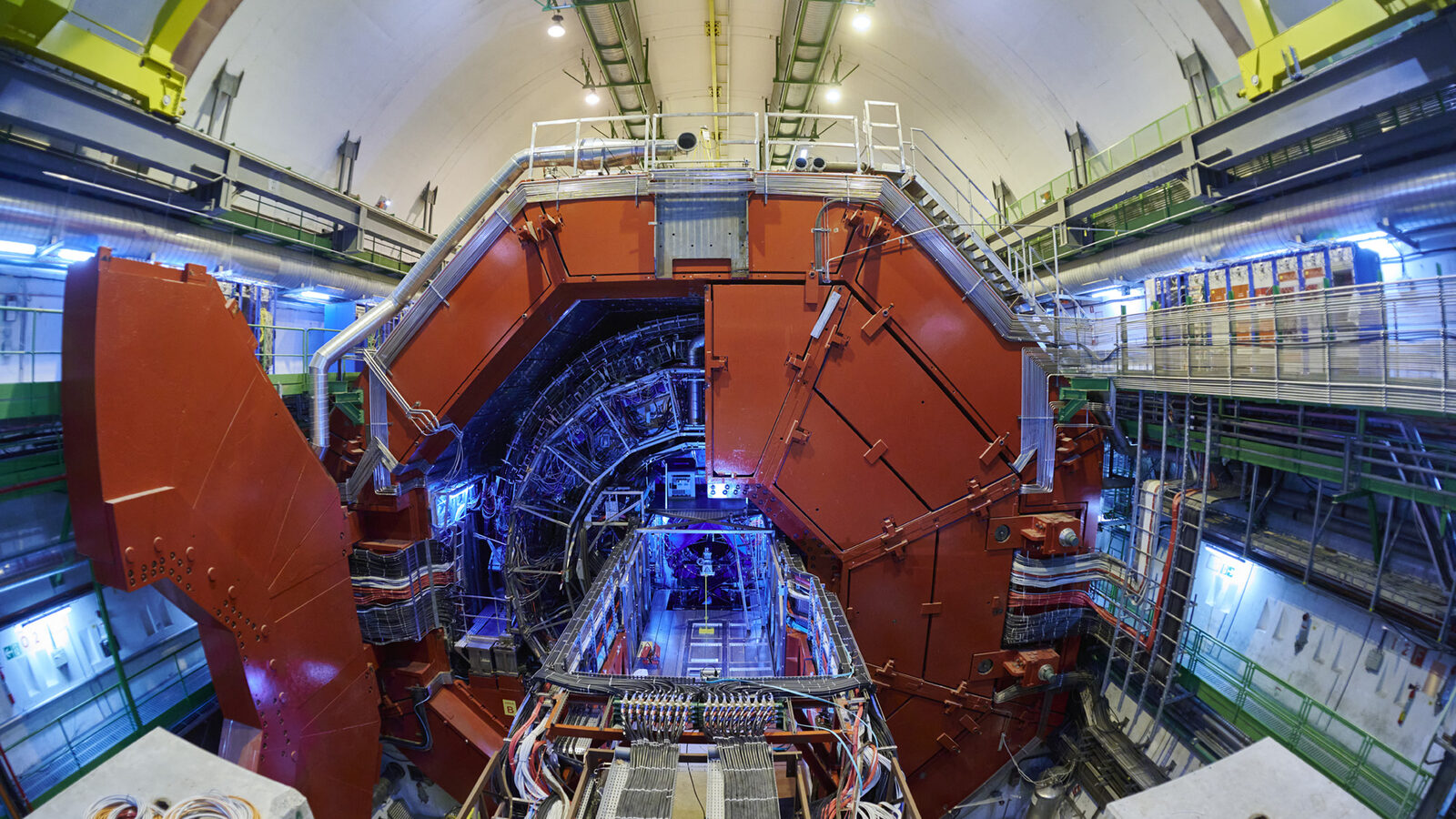
In 2023, the ALICE experiment was ready for their best year yet, until a mysterious signal threatened everything. As the LHC wraps up its 2025 lead-ion run, physicists recall how they worked together to solve the puzzle.
A proton travels around a 27-kilometer ring at nearly the speed of light. Along with a bunch of other protons, it passes through the hearts of each of a series of detectors more than ten thousand times per second. Then, on one pass, it slams into a proton coming from the other direction.
When the CERN safety team and I heard the loud rumbling 25 meters underground, we weren't concerned. With no warning, it would have been frightening, but the rush of water through pipes overhead presaged a thrilling event.
The United States has contributed the energy and expertise of hundreds of scientists and engineers, and more than half a billion dollars to the construction of the LHC particle collider and two of its experiments at the European laboratory CERN.
Building the parts for the Large Hadron Collider has presented challenges but taught many lessons for both particle physics laboratories and their industry partners.
To deal with the computing demands of the LHC experiments, scientists have created the world's largest, most international distributed-computing system.
The Large Hadron Collider, to start up in late 2007, traces its inception back to 1979. There are already more than 4000 papers in the SPIRES database that are about the LHC, either mentioning its name in the title or referring to it in a significant way.