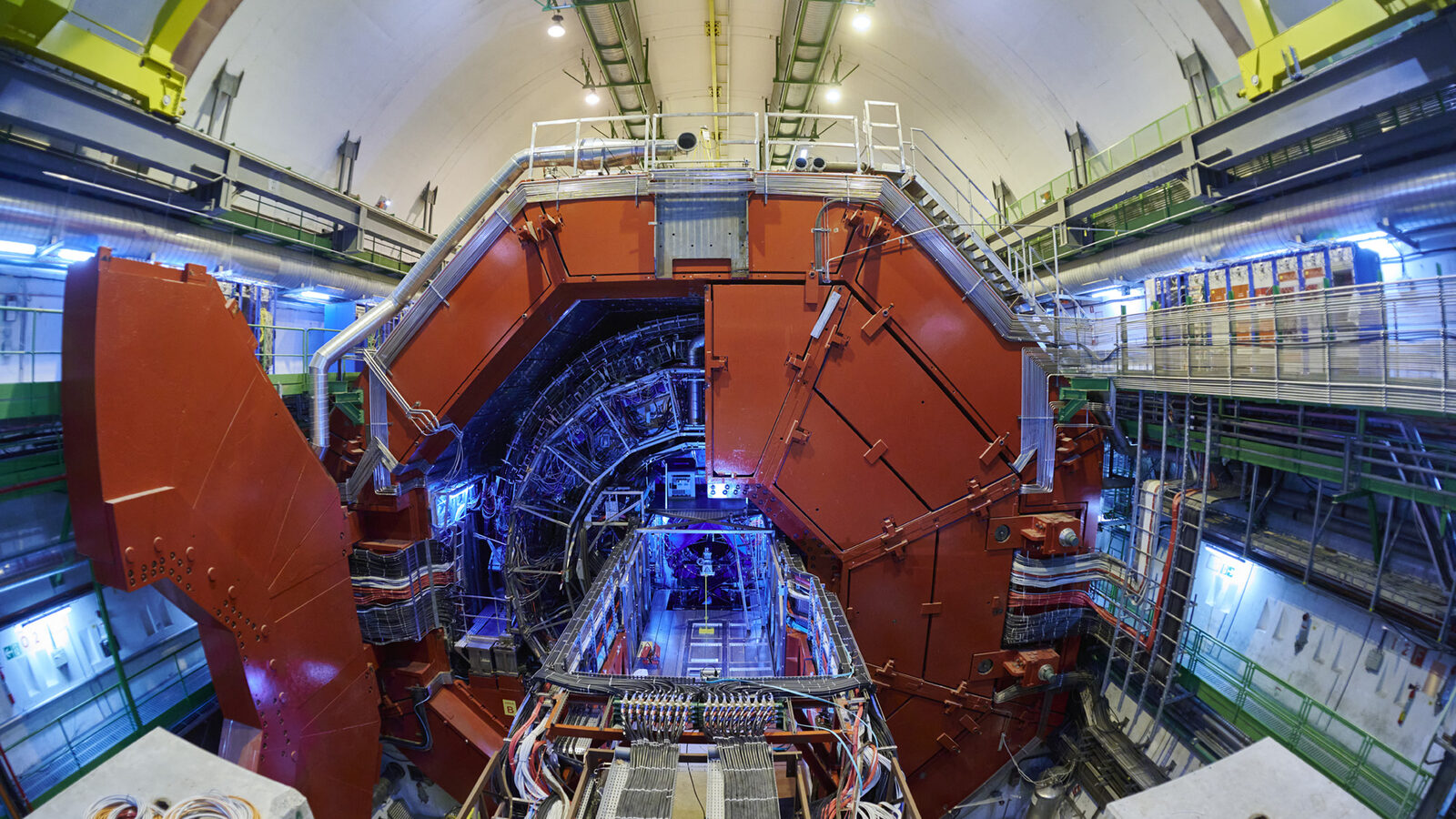
In 2023, the ALICE experiment was ready for their best year yet, until a mysterious signal threatened everything. As the LHC wraps up its 2025 lead-ion run, physicists recall how they worked together to solve the puzzle.
In high-energy collisions, luminosity, or beam brightness, isn't the only thing to consider; low background noise at the detectors is also important. When wayward particles bounce around inside detectors, they can mimic real collisions, muddy results, and even damage parts of the collider.
Citation numbers and the Impact Factor of journals are often used to evaluate the quality and the importance of research. Both quantities have some shortcomings, and people using these indicators should know when and when not to use them.
It looks like a simple silver trailer, but it's more like a shoe store on wheels. Mike Sitarz pulls his metal trailer, better known among Fermilab employees as the "shoemobile," behind the Technical Division industrial buildings at 8 a.m. every Tuesday.
Particle physics detectors in space will record gamma rays in search of dark matter, the evolution of stars, and natures most powerful particle accelerators.
Innovative 21st century technology at Argonne National Laboratory is taking researchers back to the 19th century, the 16th century, and even the third millennium BCE.
If the proposed International Linear Collider (ILC) completes the evolution from physicists' dream to discovery machine, Jonathan Dorfan will know when and where the transforming moment occurred: August 20, 2004, in Beijing, China.