The 2018 Nobel Prize in physics was awarded Tuesday to Arthur Ashkin, Gérard Mourou and Donna Strickland for their pioneering work to turn lasers into powerful tools.
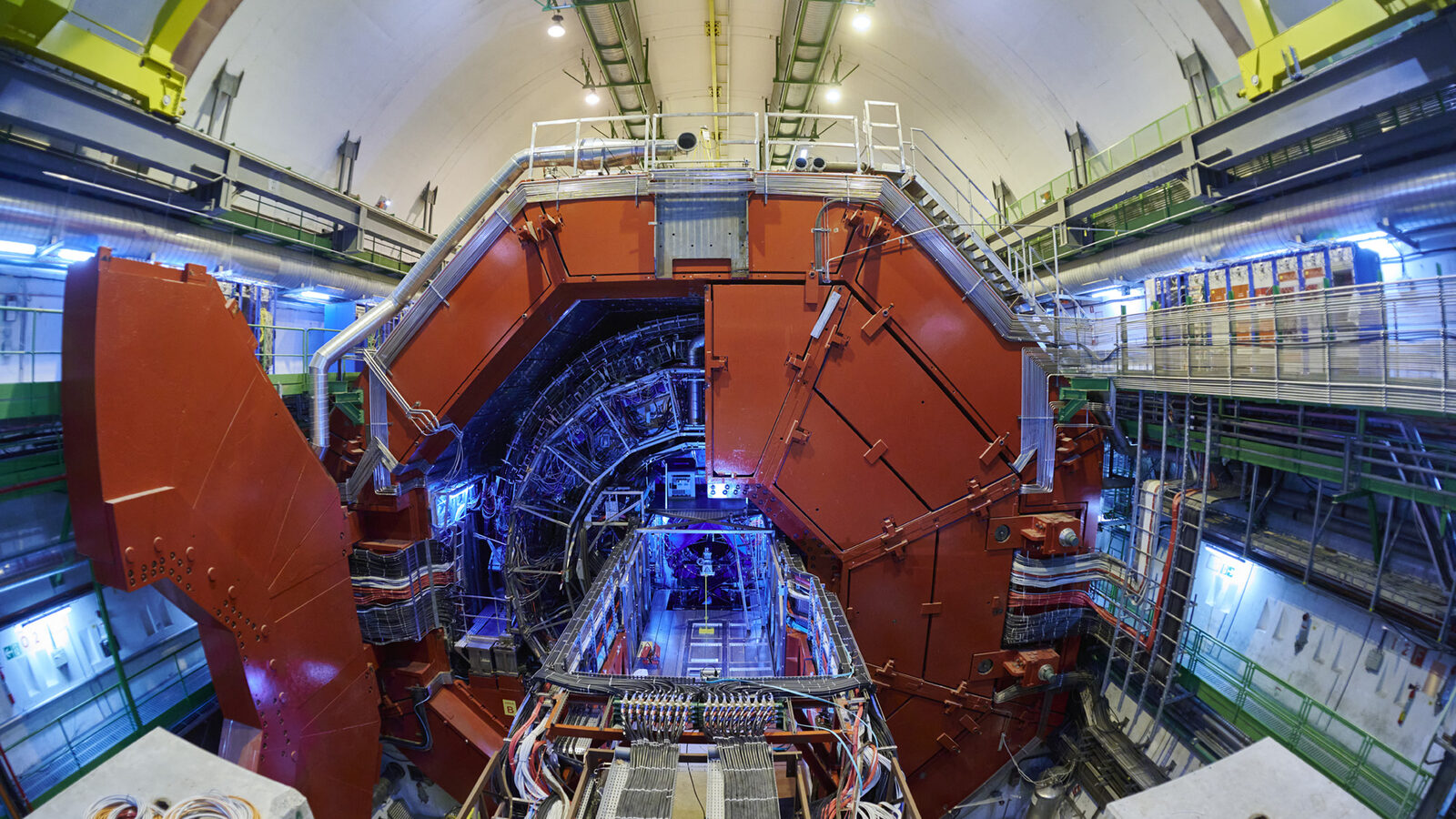
In 2023, the ALICE experiment was ready for their best year yet, until a mysterious signal threatened everything. As the LHC wraps up its 2025 lead-ion run, physicists recall how they worked together to solve the puzzle.
As a mechanical designer, Catherine Carr's first big undertaking at SLAC was a vacuum transporter system that let operators install electron cathodes, under vacuum, into the injector gun of the Stanford Linear Collider.
When physicists at Fermilab smash particles together, most of what comes out of the collisions is well understood. But every once in awhile strange things appear in the data—incidents popularly known as zoo events.
Flags, arts and crafts from different nations, and a warm welcome transformed the DOE Brookhaven Site Office's Second Annual Unity Day into a celebration of people and cultures working together.
Stanford Linear Accelerator Center librarian Lesley Wolf needed a creative idea for the next library display. Ten-year-old Connor Reed had lots of free time this summer and an extensive set of K'nex, the flexible equivalent of Lego.
In creating neutrinos for the MINOS experiment at Fermilab, the NuMI focusing horn delivers batches of protons using intense magnetic fields generated by 200,000-ampere pulses of electric current.