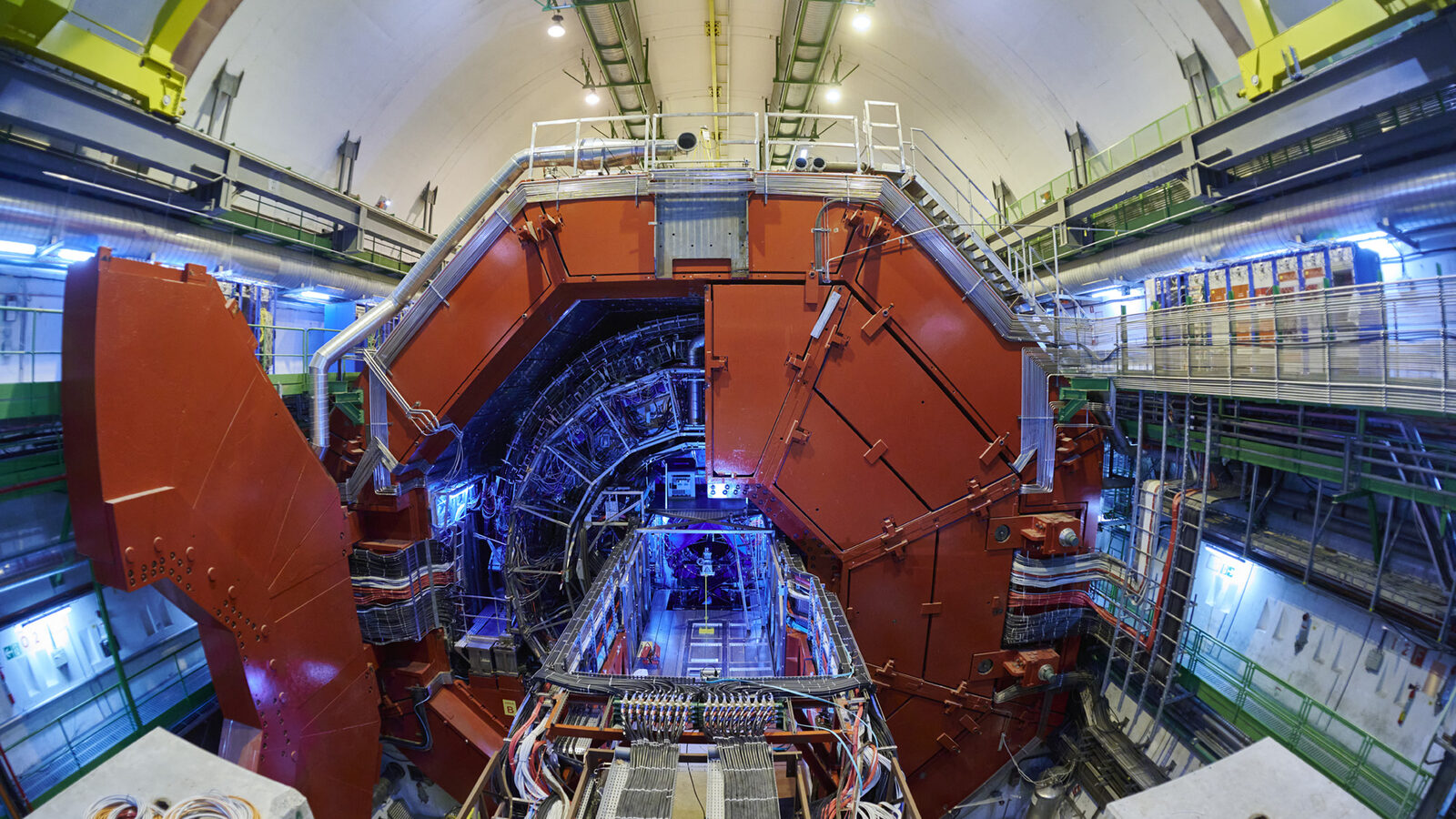
In 2023, the ALICE experiment was ready for their best year yet, until a mysterious signal threatened everything. As the LHC wraps up its 2025 lead-ion run, physicists recall how they worked together to solve the puzzle.
His photographs show scientists and experiments, large physics facilities and tiny devices, enthusiastic crowds of conference participants and lone researchers absorbed in thought.
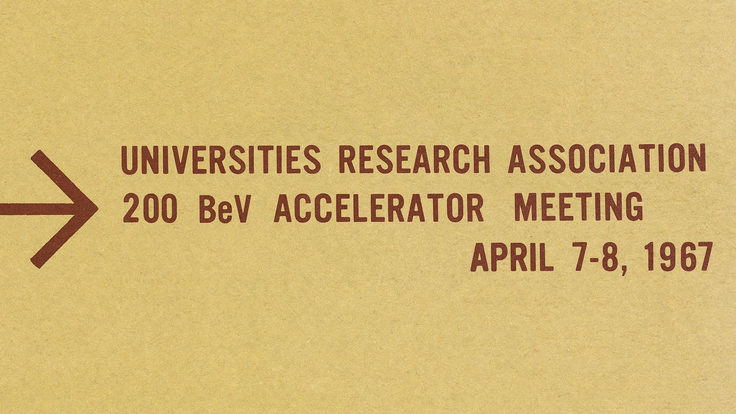
In 1967, 400 enthusiastic scientists met at Argonne National Laboratory to discuss plans to build a new 200 GeV accelerator and a national laboratory to house it.
Chalkboard discussions usually arise spontaneously, with one person explaining something to a small group standing nearby. Scratchings on the board tend to represent fragments of a conversation rather than a complete train of thought.
When objects weighing thousands of pounds have to be moved, the call goes out to riggers— specialized teams that work with hoists and cranes. They’re required to wear proper safety gear; and at some point, the riggers at SLAC decided to make a statement with their helmets.
The problem: How to get short-lived radioactive drugs from the nuclear physics lab that makes them to a hospital 2.5 kilometers away, on the far side of a busy campus, in two minutes flat.