Ultrasensitive experiments on trapped antiprotons provide a window onto possible differences between matter and antimatter. Now they could also shed light on the identity of dark matter.
In 2023, the ALICE experiment was ready for their best year yet, until a mysterious signal threatened everything. As the LHC wraps up its 2025 lead-ion run, physicists recall how they worked together to solve the puzzle.
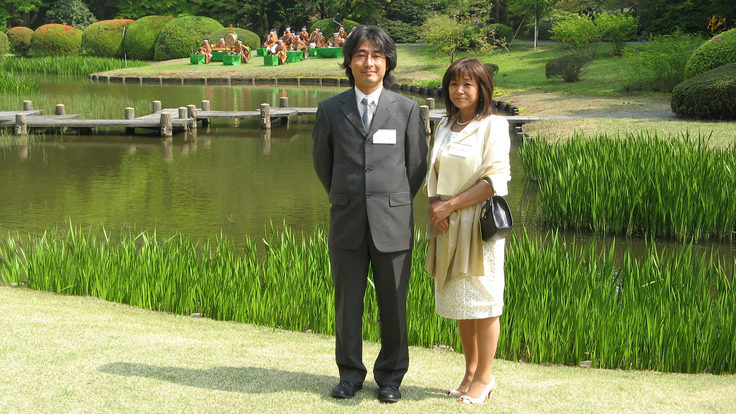
When I assumed the position of director of the Institute for the Physics and Mathematics of the Universe (IPMU), my smart-mouthed friends joked that I became the Director of the Universe.
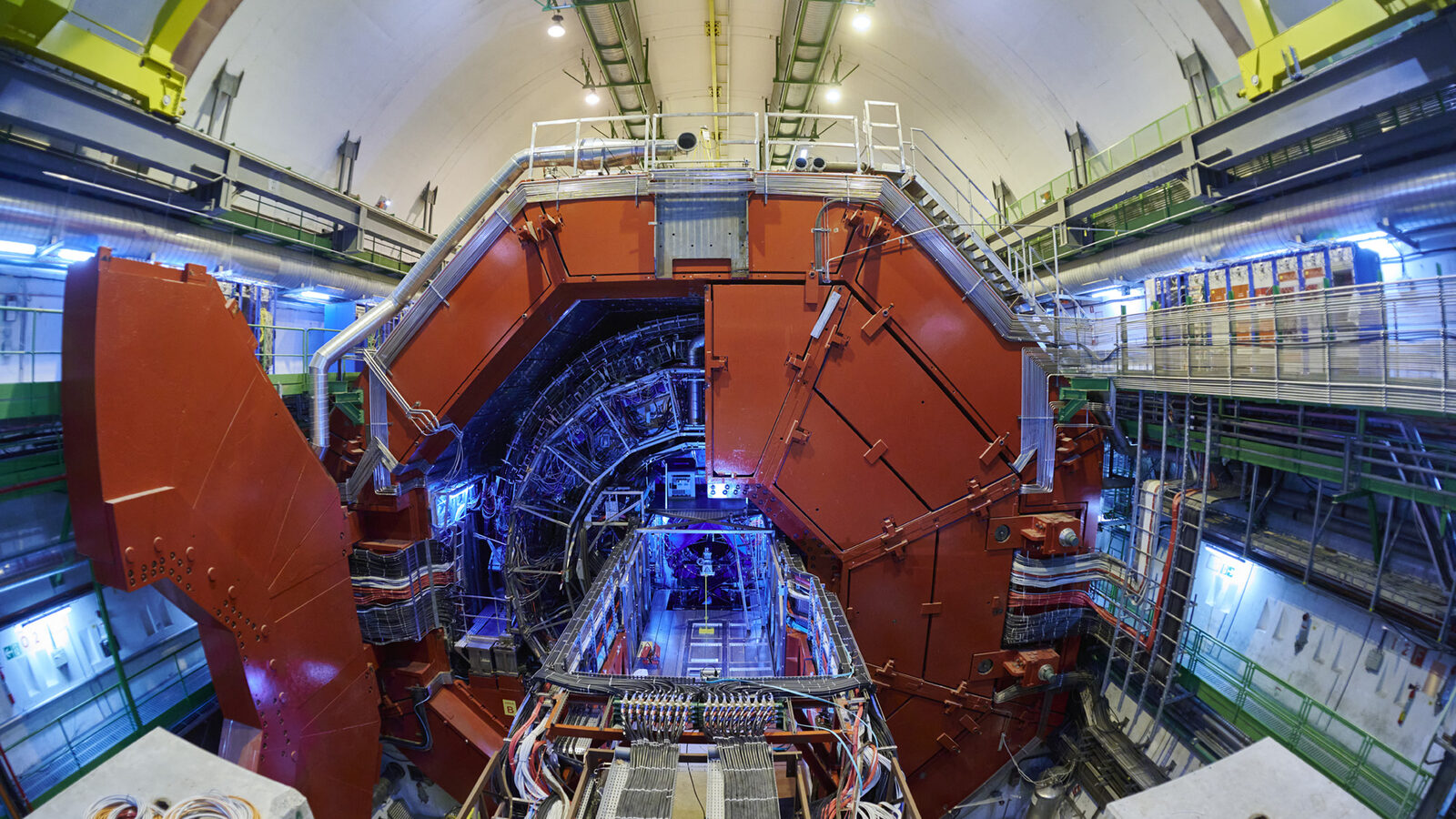
The eyes of the world were on the Large Hadron Collider at CERN on September 10, 2008. On that day, dubbed "Big Bang Day" by the BBC, the first beams of subatomic particles zoomed around the 17-mile-long, super-cooled particle accelerator.
Alberto sits down at a computer and brings up a clickable map of CERN. But rather than dry text, he is greeted with bright, musical animation, a pinball game, a quiz show, rocket ships, evil slugs, and music videos.
For her latest work, choreographer Liz Lerman took members of her dance troupe to CERN, where they reveled in the fog, danced in the aisles and found inspiration in wide-ranging conversations with scientists.
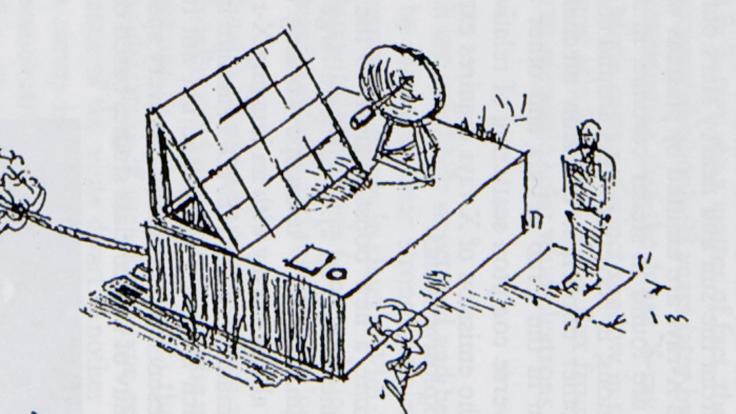
In 1991, James Cronin travelled to Leeds, England, to visit Alan Watson, an expert on cosmic-ray physics. Cronin, a Nobel Prize winner in physics who had worked on accelerator-based particle physics experiments, wanted to discuss ideas for cosmic-ray projects.
Who is the grandfather of particle physics? Some might argue he is Otto Mencke, a German philosopher and scientist who received his doctorate from Leipzig University in 1688.
When it comes to training, hiring, and retaining women and members of ethnic minorities, particle physics lags far behind other fields of science. Staffers at three national labs Fermilab, SLAC, and Brookhavenare attacking the problem at every level.