Completing the Technical Design Report required running enormous amounts of simulations, vetting the data recording and analysis process and ultimately making decisions about how to build the project.
South Africa’s 64-dish MeerKAT telescope is set to grow by almost one-third, significantly increasing its sensitivity and ability to image the far reaches of the universe.
In 2023, the ALICE experiment was ready for their best year yet, until a mysterious signal threatened everything. As the LHC wraps up its 2025 lead-ion run, physicists recall how they worked together to solve the puzzle.
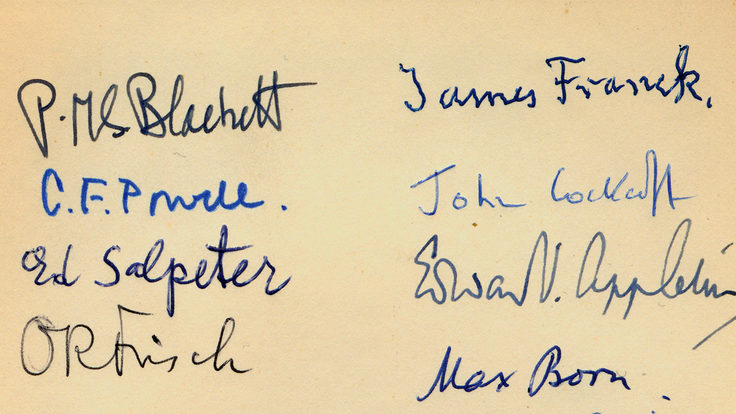
Toward the end of June 1962, a virtual pantheon of modern physics descended on a tiny island just off the shores of Lake Constance, in Germany’s rolling Bavarian countryside.
With the Large Hadron Collider up and running, expectations are high: Shouldn't discoveries start pouring in? These things don't happen overnight. We trace the long, careful path from intriguing data to official discovery.
Scientists studying global warming hope to use dust buried in Antarctic ice formations to determine how fast the winds blew as many as 90,000 years ago.
You've got to understand that all this happened a long time ago, and I reckon that with the monitoring we have in place now we'd have picked up on the event much sooner. But even if it recurred today, would we have any idea what was causing it?
When a villain threatened Gotham City, Commissioner Gordon picked up a bright red phone to call Batman. During the Cold War, a Moscow-to-Washington "red phone" served as a hotline to prevent nuclear attacks. Now SLAC has its own red phone.
John Gilbey is a writer, photographer, educator, and project manager at Aberystwyth University in Wales. For the past two decades, his fiction and non-fiction stories have appeared in the likes of Nature, New Scientist, and the Guardian.