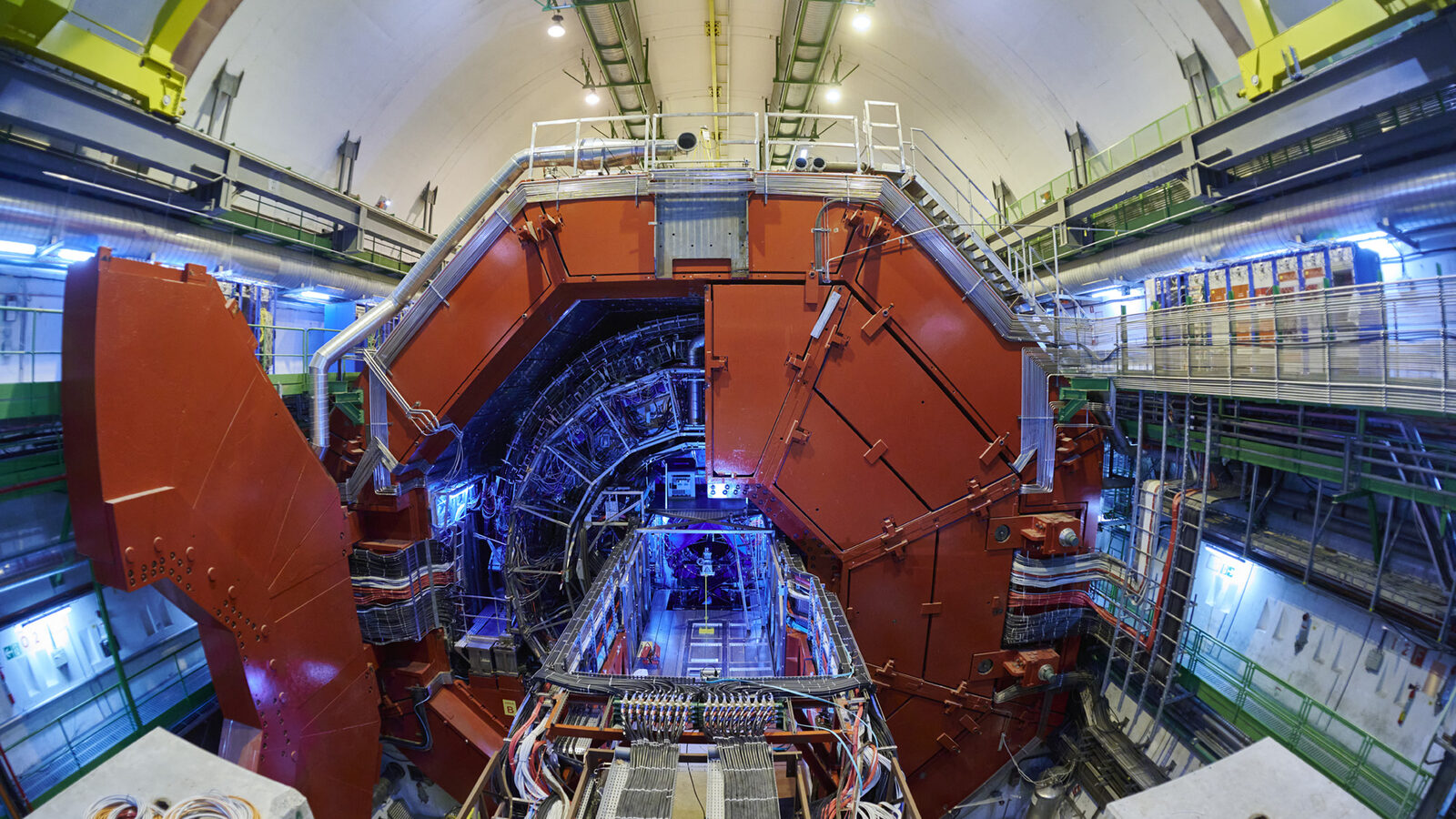
In 2023, the ALICE experiment was ready for their best year yet, until a mysterious signal threatened everything. As the LHC wraps up its 2025 lead-ion run, physicists recall how they worked together to solve the puzzle.
Canadian subatomic physics has a lot going for it: sparkling new hardware, an influx of bright young minds, and key roles in international projects. But only by doubling its operating budget can it live up to that potential, a new report suggests.
The Temple of Heaven, a masterpiece of architecture and landscape design in Beijing, symbolizes the relationship between Earth and heaven—human society and the universe—which stands at the heart of Chinese cosmology.
Working at the same place in similar fields, Michael S. Smith and Chang-Hong Yu enjoy a situation not too unusual among married couples. Not so ordinary is their line of work.
University scientists are the backbone of particle physics; like cogs in a complex machine, they deliver expertise, funding, and equipment exactly where needed. At Vanderbilt, theyre developing ways to handle a flood of data from the Large Hadron Collider.
Fermilab physicist Darren Crawford shares a birthdate, May 25, with the first Star Wars movie release. Now he is making his own mark on the fabled sci-fi fantasy series.
A snowstorm hit the Chicago area on February 13, before the start of the DOE/NSF agency review at Fermilab of the US ATLAS and US CMS collaborations, the US contributions to two of the Large Hadron Collider experiments.
Tim Rupp and Joe Klemencic, two of Fermilab’s computer security wizards, posed as the bad guys to offer a challenge in the Indiana state-wide college cyber defense competition held at Indiana Tech.