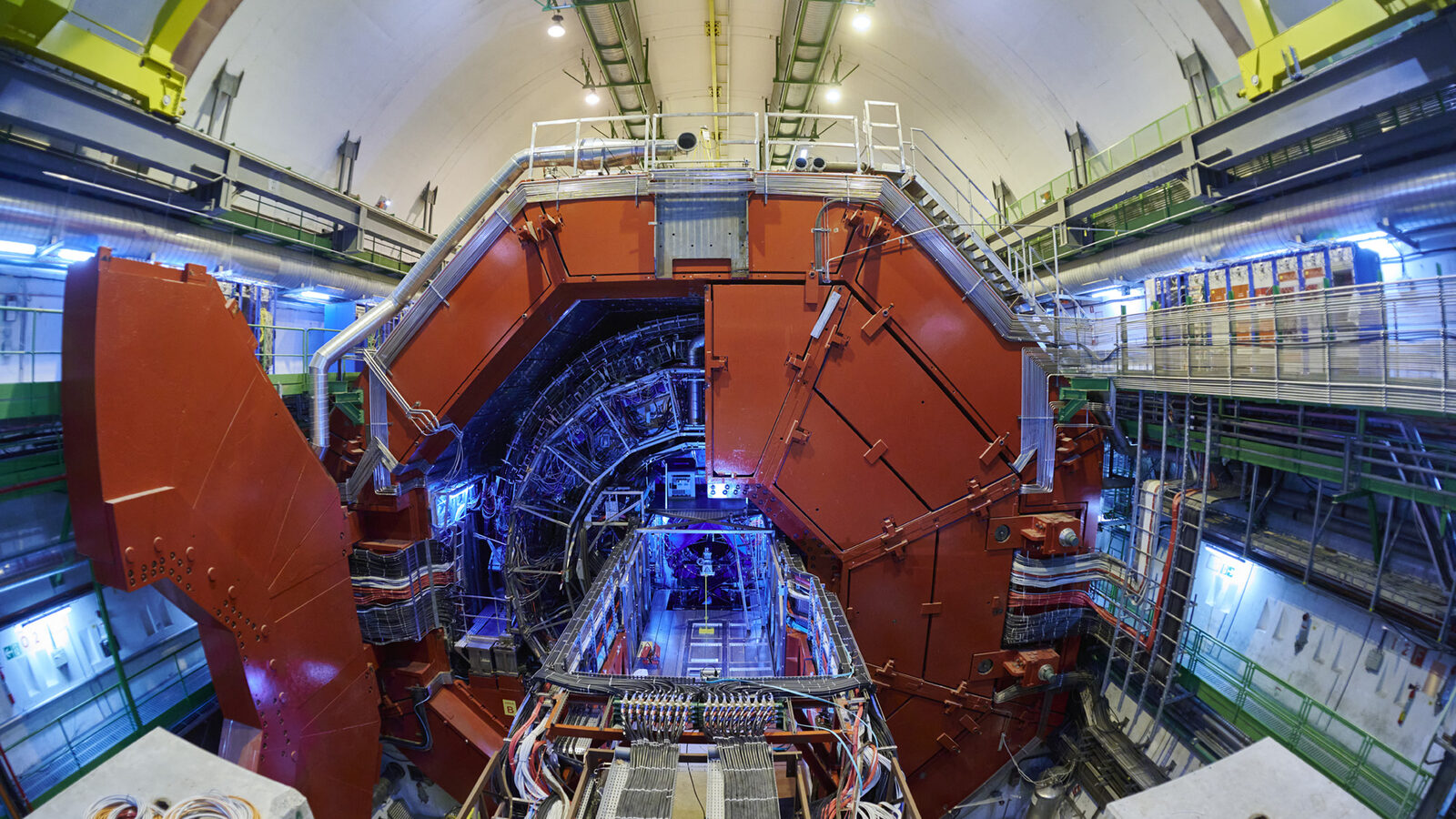
In 2023, the ALICE experiment was ready for their best year yet, until a mysterious signal threatened everything. As the LHC wraps up its 2025 lead-ion run, physicists recall how they worked together to solve the puzzle.
Men and women wearing gaudy dresses, looking for customers under garish neon signs—this is a common sight in Kabuki-cho, Shinjuku, a famous entertainment and red-light district in Tokyo, Japan.
On June 29, 2007, when Albrecht Wagner told an assembly of nearly 1800 people to go to lunch and return at 2 p.m. for a surprise, nobody could have expected what was coming.
As technology evolves, posters are getting easier to produce and pass around. But it still takes skill and imagination to illustrate the abstract ideas of physics.
To artist and engineer Amy Lee Segami, water is no ordinary substance—it is her canvas. Using her knowledge of fluid mechanics, Segami paints on water in a contemporary version of the ancient Asian art form of Suminagashi.
An impromptu frog habitat vanished with final repairs to the roof of Fermilab's Meson Lab. Leaks—lots of leaks—have plagued the lab's 12 blue and orange concave arches since it opened 32 years ago.
Atomic element 94 was named “plutonium” after Pluto, the ninth planet from the Sun (now demoted to “minor planet” status.) By tradition, plutonium should have been assigned the symbol “Pl,” but co-discoverer Glenn Seaborg gave it the symbol “Pu” as
Drawn by the chance to help answer the most fundamental questions about the universe, philanthropists are starting to make significant investments in physics research.