Fermilab, Brookhaven and Open Science Grid—a network of organizations that provides computing services for science research—dedicate computational power to COVID-19 research.
In 2023, the ALICE experiment was ready for their best year yet, until a mysterious signal threatened everything. As the LHC wraps up its 2025 lead-ion run, physicists recall how they worked together to solve the puzzle.
Nicole Ackerman thought she would always be a particle physicistuntil a newfound interest in biology drew her toward medical imaging. Her research on Cherenkov radiation, the blue glow from charged particles outracing light, could aid development of cancer treatments.
Anyone who has ever tried to move a big piece of furniture through a small door knows a few centimeters can mean the difference between success and failure.
On a cool September evening in a cornfield south of Chicago, dozens of telescopes turned skyward for one of the largest star parties in the Midwest. At the center, Fermilab astrophysicist Dan Hooper was describing something no telescope can see.
A day after the devastating March 11 earthquake and tsunami in Japan, with strong aftershocks still testing surviving buildings, Japanese residents and physicists were offering beds, food, and rides to stranded foreign physicists.
To the sound of a traditional German miners' song, the two tunnel builders were lifted up to a shrine on the wall directly above the giant tunnel boring machine. They gently placed a wooden statue of St. Barbara into the shrine.
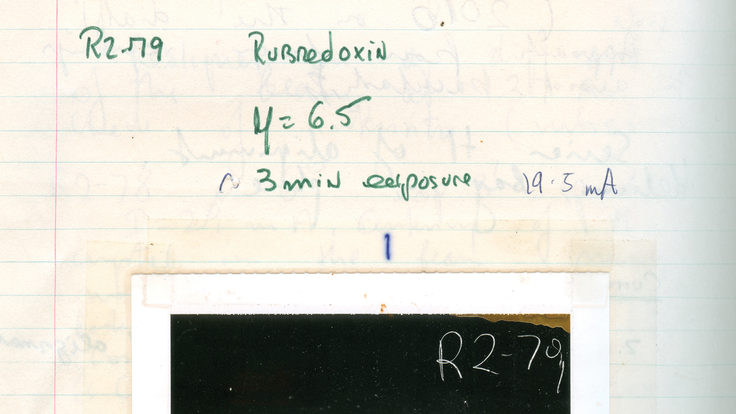
Today, scientists at 22 synchrotron light sources are analyzing protein structures, and the worldwide Protein Data Bank contains the structures of more than 72,000 proteins.