Fermilab has been selected to lead one of five national centers to bring about transformational advances in quantum information science as a part of the US National Quantum Initiative.
Scientists on an experiment at the Large Hadron Collider see massive W particles emerging from collisions with electromagnetic fields. How can this happen?
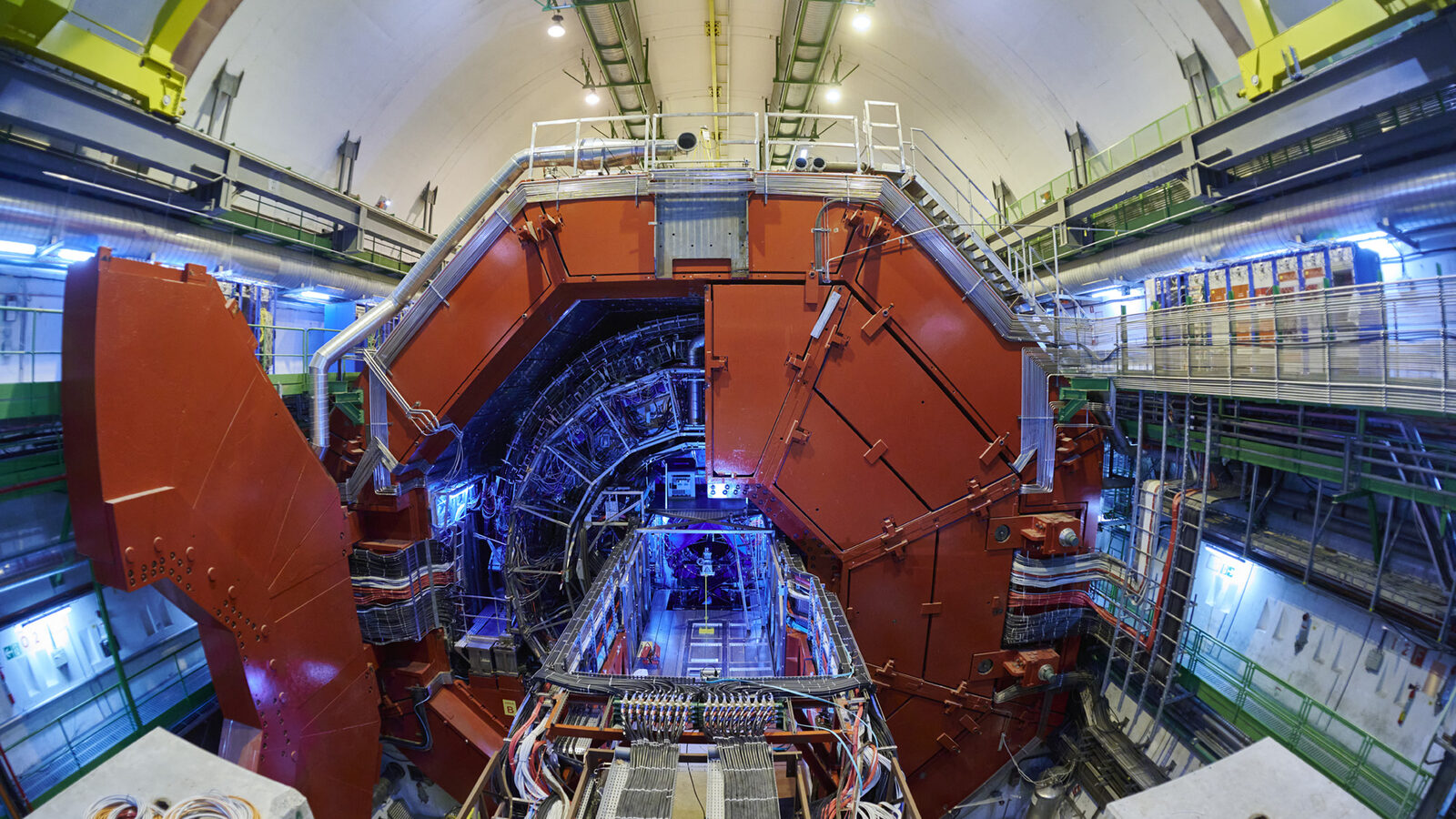
In 2023, the ALICE experiment was ready for their best year yet, until a mysterious signal threatened everything. As the LHC wraps up its 2025 lead-ion run, physicists recall how they worked together to solve the puzzle.
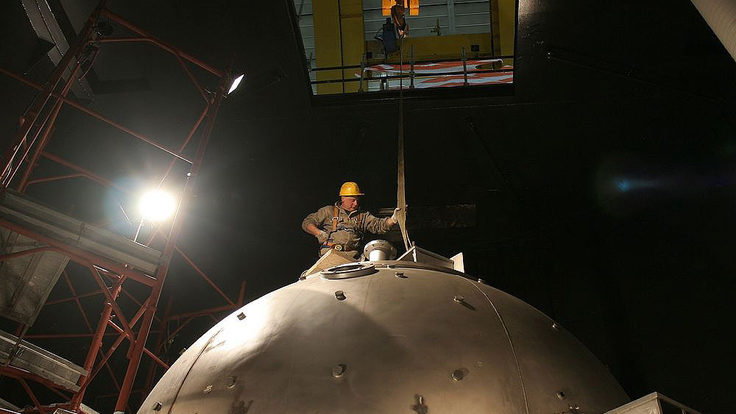
Filled with rare, low-radioactivity material, the DarkSide-50 experiment will have some of the lowest background rates of any dark-matter detector. That should help it detect highly sought-after dark-matter candidates called weakly interacting massive particles, or WIMPs.
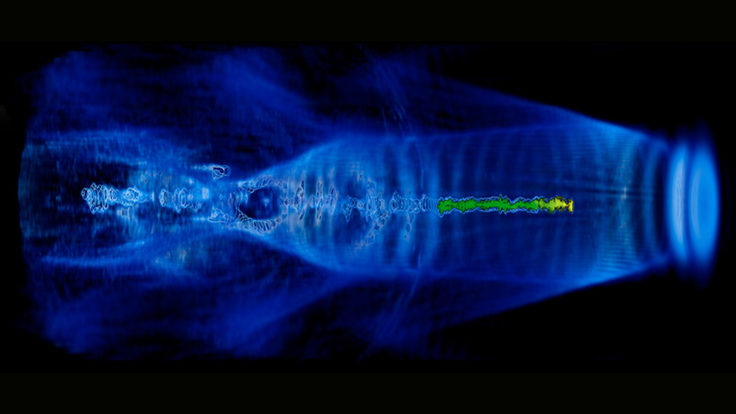
Researchers at Berkeley Lab have measured the quality of beam produced by a plasma accelerator, revealing that this novel type of accelerator may be better suited for light-source science than previously thought.
If you could detect a bowling ball’s gravitational waves, you would know when someone threw the ball—even if you were standing outside the bowling alley.
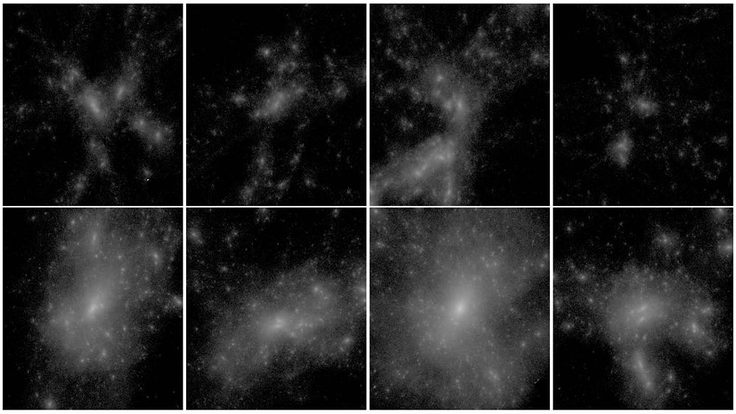
A growing suite of computational instruments is helping scientists determine how fast local concentrations of dark matter move, which in turn could help them cut in on the dance of dark matter particles.