The latest searches conducted by the MoEDAL experiment at the Large Hadron Collider considerably shrink the theoretical arenas in which the hunt for magnetic monopoles can continue.
Using machine learning, string theorists are finally showing how microscopic configurations of extra dimensions translate into sets of elementary particles—though not yet those of our universe.
Theoretical physicists use machine-learning algorithms to speed up difficult calculations and eliminate untenable theories—but could they transform what it means to make discoveries?
For more than 20 years in experimental particle physics and astrophysics, machine learning has been accelerating the pace of science, helping scientists tackle problems of greater and greater complexity.
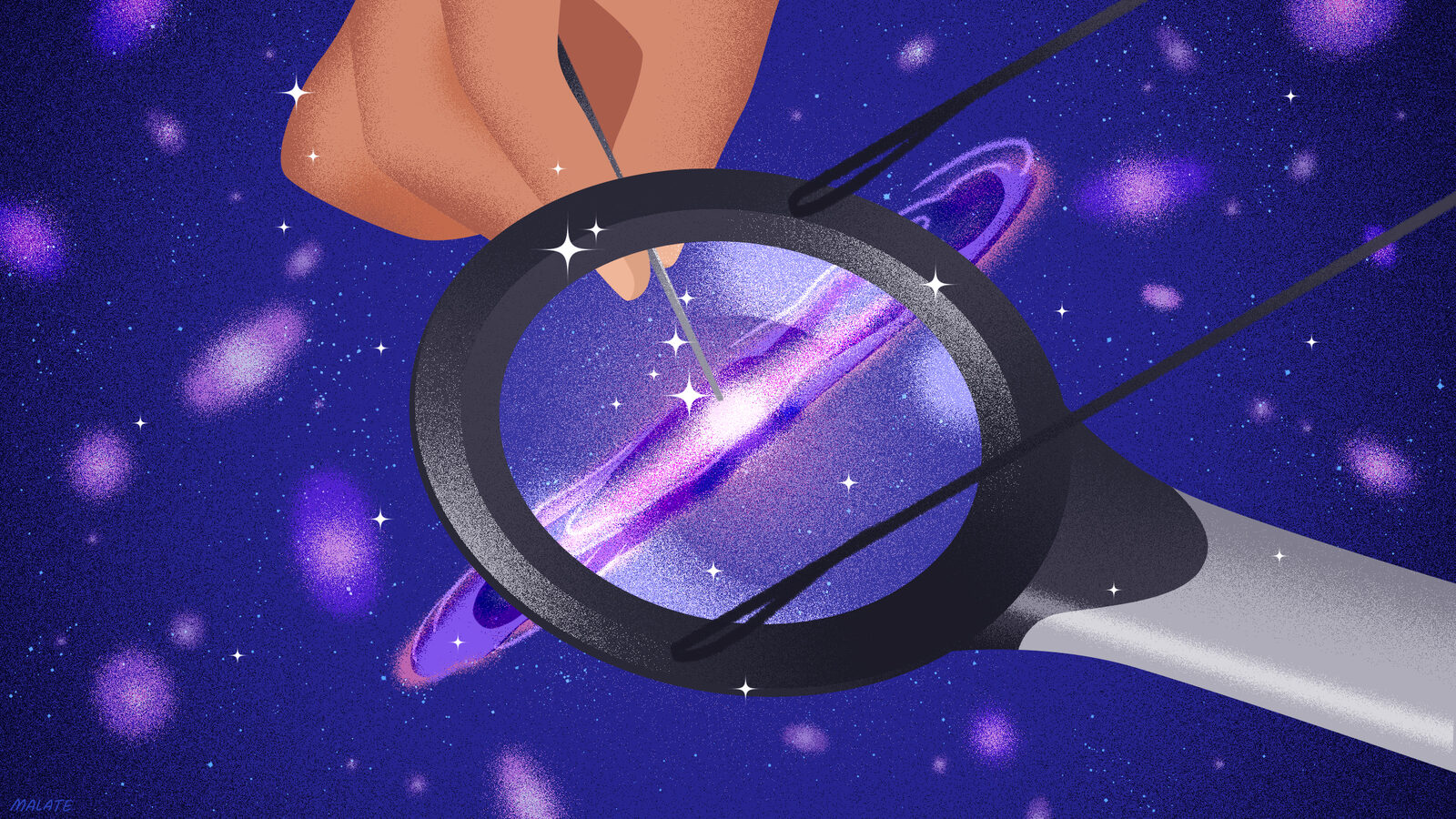
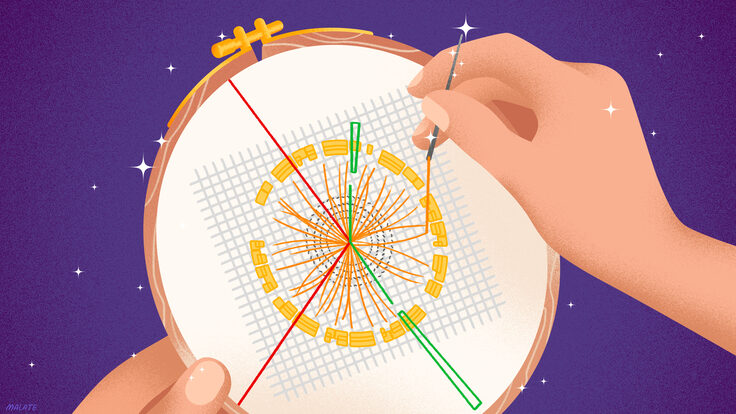
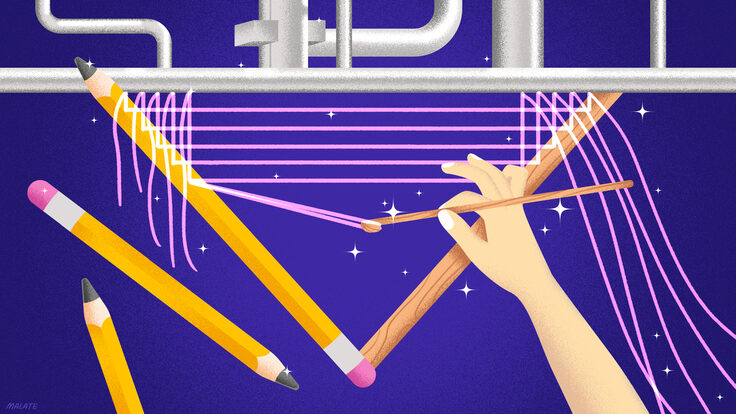
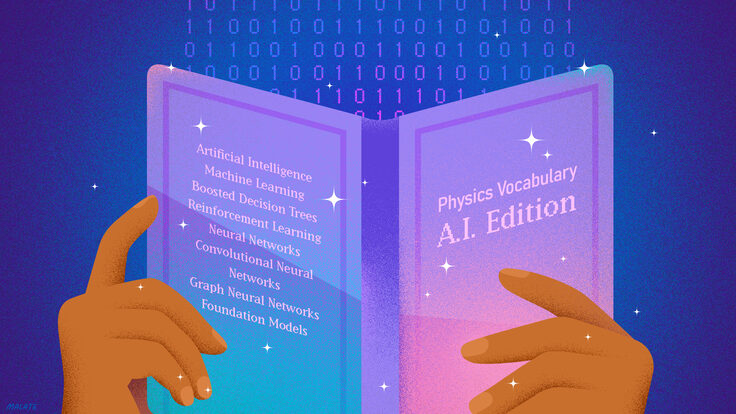
In the coming weeks, Symmetry will explore the ways scientists are using artificial intelligence to advance particle physics and astrophysics—in a series of articles written and illustrated entirely by humans.
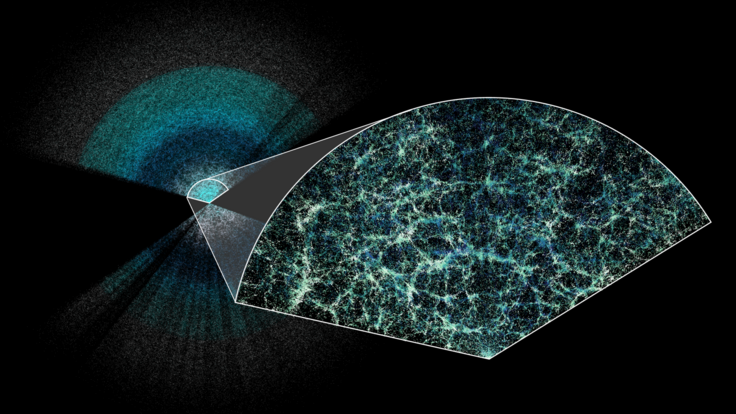
With just its first year of data, DESI has surpassed all previous 3D spectroscopic maps combined and confirmed the basics of our best model of the universe.
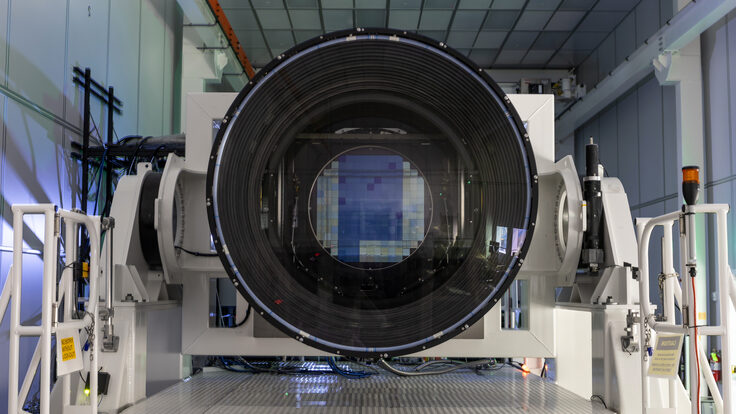
Once set in place atop a telescope in Chile, the 3,200-megapixel LSST Camera will help researchers better understand dark matter, dark energy and other mysteries of our universe.